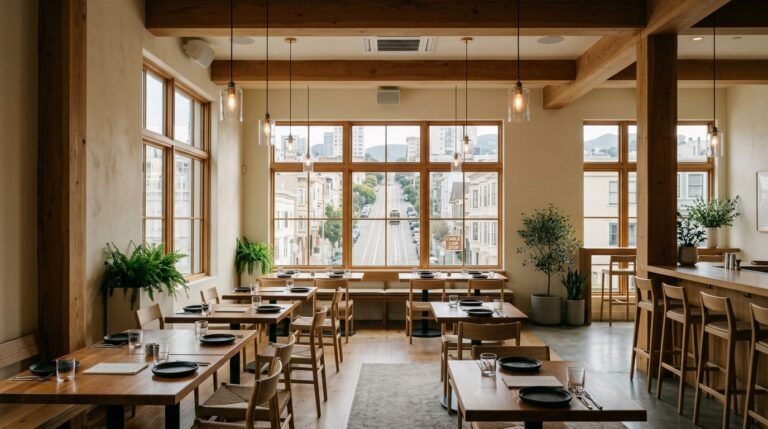
Your restaurant is bustling. Every table is full, the kitchen is humming, and guests seem happy. Yet at the end of the month, your profit margins are razor-thin—or worse, you’re barely breaking even. If this scenario sounds familiar, you’re not alone. According to the National Restaurant Association, the average restaurant profit margin hovers between 3-5%, with many operators struggling to achieve even that.
The culprit? Often, it’s not your food quality, service, or location—it’s your menu. More specifically, it’s a menu that hasn’t been engineered for profitability. Traditional menu design focuses on what sounds delicious or looks appealing, but menu engineering software takes a data-driven approach that can transform your bottom line.
In this comprehensive guide, we’ll explore how AI-powered menu engineering software works, why it’s becoming essential for modern restaurants, and how tools like AI Chef Pro can help you optimize every dish for maximum profitability while keeping guests delighted.
What is Menu Engineering? Understanding the Foundation
Menu engineering is a strategic approach to menu design that originated in the 1980s through the work of hospitality professors Michael Kasavana and Donald Smith at Michigan State University. At its core, menu engineering analyzes each menu item based on two critical dimensions: profitability (contribution margin) and popularity (sales volume).
By plotting dishes on a matrix using these two variables, restaurants can categorize every item into one of four quadrants. This classification provides clear guidance on how to treat each dish—whether to promote it prominently, reprice it, reformulate it, or remove it entirely.
Traditional menu engineering required manual data collection, spreadsheet calculations, and time-consuming analysis. Modern menu engineering software automates this process, providing real-time insights that would take hours to compile manually.
The Menu Engineering Matrix: Stars, Plowhorses, Puzzles, and Dogs
The classic menu engineering matrix divides items into four categories based on their performance:
⭐ Stars (High Profitability + High Popularity)
These are your menu superheroes—dishes that customers love AND that generate strong margins. Stars represent the sweet spot every restaurant aims for. Your strategy should focus on making these items even more visible on your menu, training staff to upsell them, and ensuring consistent quality to maintain their status.
Action: Feature prominently, use descriptive language, place in prime menu real estate (top right or center), and train servers to recommend.
🐴 Plowhorses (Low Profitability + High Popularity)
Plowhorses are workhorses that sell well but don’t contribute much to your bottom line. These items are popular with guests but have slim margins, often due to high ingredient costs or labor-intensive preparation. While you can’t simply eliminate popular items, you have options to improve their profitability.
Action: Consider minor price increases, reduce portion sizes slightly, substitute expensive ingredients, or bundle with high-margin add-ons.
🧩 Puzzles (High Profitability + Low Popularity)
Puzzles are the hidden gems of your menu—dishes that could be highly profitable if only more customers ordered them. These items often suffer from poor placement, unappealing descriptions, or simply being overlooked by guests.
Action: Reposition on the menu, rewrite descriptions to be more enticing, train staff to recommend, offer as specials, or bundle with popular items.
🐕 Dogs (Low Profitability + Low Popularity)
Dogs are the underperformers—items that neither sell well nor make money. These dishes tie up inventory space, complicate kitchen operations, and distract from your stars. Unless they serve a specific strategic purpose (like attracting a niche dietary group), dogs should be candidates for removal.
Action: Consider elimination, or if retention is necessary, reimagine the dish with different ingredients or preparation methods.

The AI Revolution in Menu Engineering
While traditional menu engineering provides valuable insights, it’s often retrospective and labor-intensive. You might analyze last quarter’s data to make decisions for next month—a delay that can cost thousands in missed opportunities. This is where AI menu engineering software transforms the game.
AI-powered menu engineering doesn’t just analyze historical data—it predicts future trends, suggests real-time adjustments, and continuously optimizes your menu based on multiple variables including seasonality, ingredient costs, customer preferences, and competitive positioning.
How AI Chef Pro Automates Menu Engineering
AI Chef Pro’s Menu Engineering and Pricing AI tools represent the cutting edge of restaurant menu optimization. Instead of spending hours in spreadsheets, the platform automatically:
- Collects and analyzes data: Integrates with your POS system to track every sale, ingredient cost fluctuation, and customer preference in real-time
- Categorizes dishes automatically: Instantly classifies every menu item into Stars, Plowhorses, Puzzles, or Dogs based on current performance
- Predicts trends: Uses machine learning to forecast which dishes will become stars or dogs based on seasonal patterns and market trends
- Suggests optimizations: Provides specific, actionable recommendations for each category—whether that’s a 50-cent price increase, a menu description rewrite, or ingredient substitution
- Monitors competitor pricing: Tracks local market pricing to ensure your menu remains competitive while maximizing margins
- Simulates scenarios: Shows projected impact of menu changes before you implement them, reducing risk
The result? Menu decisions backed by data rather than gut feeling, implemented faster than ever before, with continuous optimization that keeps your profitability improving month after month.
Real-World Success Stories: Restaurants That Transformed Their Menus
Theory is valuable, but real results speak louder. Here are three restaurants that used AI menu engineering software to dramatically improve their profitability:
Case Study 1: Bella Vista Italian Restaurant – Portland, OR
Bella Vista was a mid-priced Italian restaurant struggling with 4% profit margins despite consistently full dining rooms. Owner Maria Chen suspected her menu was the problem but didn’t know where to start.
The Analysis: Using AI Chef Pro’s menu engineering tools, Maria discovered that her homemade lasagna—a dish she was particularly proud of—was actually a “Dog.” High labor costs and expensive imported ingredients meant each sale barely broke even, yet it occupied prime menu space.
Conversely, her truffle mushroom risotto, buried at the bottom of the menu, was a hidden “Puzzle” with excellent margins that customers rarely ordered.
The Changes: Maria moved the risotto to the menu’s top-right corner with an enticing description, trained servers to recommend it, and added a $4 supplement option for extra truffles. She moved the lasagna to a smaller section and raised the price by $2.
The Results: Within three months, average profit per cover increased by $3.20. Overall profit margins improved from 4% to 9%, and monthly revenue increased by $12,000.
Case Study 2: Coastal Catch Seafood Grill – Miami, FL
This beachfront seafood restaurant faced classic challenges: highly variable ingredient costs and a sprawling menu that confused customers and complicated kitchen operations.
The Analysis: AI analysis revealed that 40% of the menu consisted of “Dogs”—items ordered less than 5 times per week with poor margins. Many of these were complex preparations using expensive proteins that rarely sold.
Meanwhile, their fish tacos—a simple preparation using local catch—were a “Star” with 22% food costs and high popularity.
The Changes: The restaurant eliminated 18 underperforming dishes, expanded the fish taco section with three variations, and introduced dynamic pricing that adjusted based on daily market fish prices.
The Results: Menu size reduced by 35%, kitchen efficiency improved, food waste dropped by 30%, and profit margins increased from 6% to 11%.
Case Study 3: Urban Vegan Kitchen – Austin, TX
This plant-based restaurant struggled with customer perception that vegan food should be inexpensive, leading to underpriced menu items and poor margins.
The Analysis: Menu engineering revealed that their “Plowhorses”—highly popular but underpriced items—were dragging down overall profitability. Their jackfruit carnitas tacos, for example, sold 150 units per week but at a price point that generated only 8% gross profit.
The Changes: Using AI Chef Pro’s pricing optimization and competitor analysis, the restaurant implemented strategic price increases of $1-3 across 60% of the menu. The AI suggested bundle offerings that improved perceived value while maintaining margins.
The Results: Despite raising prices, customer traffic increased by 15% (likely due to improved menu focus). Average ticket value increased by $4.50, and profit margins improved from 5% to 12%.
Menu Item Categories: A Detailed Breakdown
Understanding how different types of dishes typically perform can help you set realistic expectations and identify opportunities. Here’s how common menu categories typically shake out in menu engineering analysis:
| Category | Typical Classification | Avg Food Cost % | Optimization Strategy |
|---|---|---|---|
| Appetizers | Often Stars | 25-35% | Promote heavily; train servers to suggest |
| Pasta Dishes | Stars/Plowhorses | 18-28% | Leverage low food costs; add premium proteins |
| Steak/Prime Cuts | Plowhorses | 40-50% | Market price, upsell sides and sauces |
| Seafood Specials | Variable | 30-45% | Use dynamic pricing; promote seasonal items |
| Vegetarian Options | Often Puzzles | 20-30% | Improve descriptions; feature prominently |
| Desserts | Usually Stars | 15-25% | Server training crucial; display temptingly |
| Signature Cocktails | Top Stars | 15-20% | Maximize visibility; create exclusivity |
🚀 Transform Your Menu in 48 Hours
AI Chef Pro’s Menu Engineering tool analyzes your entire menu
and delivers actionable recommendations in minutes, not weeks.
Start with 5 free credits • No credit card required
Step-by-Step Implementation: Getting Started with Menu Engineering Software
Ready to optimize your menu? Here’s how to implement menu engineering software in your restaurant:
Step 1: Data Integration (Days 1-3)
Connect your POS system to the menu engineering software. AI Chef Pro integrates with most major POS platforms including Toast, Square, Lightspeed, and Clover. The software will import historical sales data, typically going back 3-12 months.
Pro Tip: Ensure your menu items are consistently named in your POS system. Variations like “Caesar Salad” and “Caesar salad” will be treated as different items by the software.
Step 2: Cost Input (Days 3-5)
Input or import your recipe costs. This includes:
- Ingredient costs per dish
- Labor time estimates for preparation
- Overhead allocation per menu category
AI Chef Pro can help calculate these automatically if you provide recipes, or you can input target food cost percentages.
Step 3: Initial Analysis (Day 5)
The software will generate your first menu engineering matrix. Review the categorization with your chef and management team. Look for surprises—dishes you thought were stars that are actually plowhorses, or hidden gems you didn’t know were profitable.
Step 4: Strategy Development (Days 6-10)
Based on the analysis, develop specific action plans for each category:
- Stars: How will you promote these? New descriptions? Better placement?
- Plowhorses: Can you reduce costs or increase prices? What’s the risk?
- Puzzles: How can you drive more orders? Server training? Specials?
- Dogs: Which will you eliminate? Which will you reformulate?
Step 5: Menu Redesign (Days 11-14)
Implement the physical (or digital) menu changes. This includes:
- Repositioning items based on their classification
- Rewriting descriptions for puzzles and stars
- Adjusting prices as recommended
- Removing or adding dishes
Step 6: Staff Training (Days 14-16)
Train your servers on the new menu strategy. They should know which items are stars (prioritize upselling), which are puzzles (suggest when appropriate), and the stories behind key dishes.
Step 7: Monitor and Optimize (Ongoing)
Menu engineering isn’t a one-time project—it’s an ongoing discipline. Review your matrix monthly, track the impact of changes, and continuously refine. AI Chef Pro makes this easy with automated weekly reports and alerts when items shift categories.
Specific Benefits of AI-Powered Menu Engineering
While traditional menu engineering provides value, AI menu engineering software delivers advantages that manual analysis simply cannot match:
1. Real-Time Adaptation
Ingredient costs fluctuate constantly. A dish that was a star last month might become a plowhorse when protein prices spike. AI software monitors these changes continuously and alerts you when a dish’s classification changes.
2. Predictive Analytics
Rather than just analyzing what happened, AI predicts what will happen. It can forecast which dishes will trend upward based on seasonal patterns, local events, or emerging food trends—allowing you to prepare and promote accordingly.
3. Competitive Intelligence
AI Chef Pro tracks competitor pricing and menu changes in your area, ensuring your menu remains competitively positioned while maximizing your margins.
4. Scenario Modeling
Wonder what would happen if you raised prices by 10% or removed a popular but unprofitable item? AI software can simulate these scenarios and show projected impacts on revenue and profit before you make the change.
5. Time Savings
Manual menu engineering for a 50-item menu might take 8-12 hours of analysis. AI software reduces this to minutes, allowing you to focus on implementation rather than calculation.
6. Continuous Learning
The AI learns from your specific restaurant patterns—what works in your market, with your customers, at your price point. Over time, recommendations become increasingly tailored and accurate.

How AI Menu Engineering Algorithms Actually Work Behind the Scenes
There’s a widespread assumption that AI menu engineering simply automates what restaurants already do with spreadsheets—plug in costs, apply a markup, and call it optimization. In reality, true AI-driven menu engineering operates on fundamentally different principles than manual methods. While spreadsheets follow static formulas you set once, AI systems continuously learn from data patterns, adapt to changing conditions, and make probabilistic predictions that no manual process can match. This isn’t incremental automation—it’s a structural shift in how menu decisions get made. The distinction becomes clear when you examine the four technical components that separate genuine AI from rule-based software masquerading as intelligence.
1. Machine Learning Demand Forecasting
ML models predict item-level demand by analyzing historical POS data alongside variables like weather patterns, local events, holidays, and seasonal trends. Techniques like gradient boosting and ARIMA process these multidimensional datasets to generate demand forecasts that account for both recurring patterns and emerging anomalies. This fundamentally differs from manual trend analysis, which relies on human intuition and typically misses subtle correlations between external factors and sales performance.
2. Natural Language Processing for Menu Descriptions
NLP systems analyze which descriptor words actually drive sales lift—”house-made” versus “homemade,” “grandma’s” versus “traditional,” or which culinary origin labels perform in specific demographics. The technology then generates optimized copy and can produce translations for multilingual menus at scale. This goes far beyond what a copywriter could test manually, enabling continuous A/B testing across entire menus.
3. Computer Vision for Menu Layout Optimization
CV models analyze customer eye-tracking data and heatmap simulations to score menu layouts against the golden triangle principle—the area where eyes naturally land first, typically the upper-right quadrant of a menu page. AI quantifies exactly how much visibility each item receives and recommends positioning that maximizes profit-per-view, moving beyond designer intuition to data-driven layout decisions.
4. Contribution Margin Optimization with Linear Programming
Linear programming solves the multi-constraint pricing problem: maximize profit while respecting competitor price bounds, ingredient availability windows, kitchen capacity limits, and labor scheduling. What was research-only a decade ago—accessible only to academic institutions and Fortune 500 operations—is now consumer-grade technology. Modern AI platforms run these complex optimizations in minutes, not weeks.
These four components rarely exist in isolation in enterprise solutions, which is why many restaurants experience piecemeal results. AI Chef Pro combines all four technical layers inside a single interface, treating menu engineering as an integrated system rather than separate problems. For a tool-by-tool comparison of specific software options, you can also read our Best Menu Engineering Software 2026: 10 Tools Compared guide.
AI Menu Engineering vs Traditional Menu Engineering: The Capability Gap
The gap between traditional menu engineering and AI-driven approaches isn’t just technological—it’s operational and financial. Understanding what each methodology delivers helps restaurant owners and chefs make informed investment decisions.
| Capability | Traditional (Manual/Spreadsheet) | Rule-Based Software | True AI Menu Engineering |
|---|---|---|---|
| Recalculation frequency | Quarterly | Monthly | Real-time |
| Item classification | Manual 4-quadrant analysis | Automated 4-quadrant placement | Predictive with explainable reasoning |
| Pricing recommendations | Rule-of-thumb markup | Formula-based calculations | Model-driven scenario planning |
| Description optimization | Copywriter intuition | Static templates | NLP-generated with continuous A/B testing |
| Layout decisions | Designer’s experience | None | CV-scored golden triangle optimization |
| Competitor context | None | Manual data entry | Automated scraping and matching |
| Execution horizon | Weeks | Days | Minutes |
| Typical margin lift | 0-3% inconsistent | 3-6% | 8-15% |
Most restaurants still operate at the “traditional” level because they assume AI requires expensive enterprise contracts, dedicated data teams, and months of implementation. This assumption was accurate five years ago but no longer reflects reality. Modern consumer-grade AI platforms like AI Chef Pro deliver enterprise-level capability at a fraction of the cost—typically under €25/month—with no technical setup required. The real barrier isn’t budget or complexity; it’s awareness that restaurant-grade AI has matured beyond the research lab. Restaurants still relying on quarterly spreadsheet reviews are essentially flying blind while competitors with real-time AI optimization capture 8-15% margin improvements that compound monthly.
See the algorithms in action
AI Chef Pro ships these four AI capabilities — demand forecasting, NLP copy, computer-vision layouts, contribution-margin optimization — inside one interface. 10 free uses per month, Pro €25/mo.
Frequently Asked Questions About Menu Engineering Software
How often should I analyze my menu using engineering software?
For most restaurants, a comprehensive analysis quarterly is ideal, with monthly check-ins to monitor category shifts. However, if you use AI-powered software like AI Chef Pro, continuous monitoring happens automatically, alerting you to significant changes as they occur.
Will menu engineering make my menu boring?
Quite the opposite! Menu engineering helps you identify your true stars—the dishes that guests love AND that make money. By promoting these winners and improving or eliminating underperformers, you create a menu where every item is a potential hit. Many restaurants find they can be more creative, knowing they have data to back their innovations.
How quickly will I see results from menu engineering?
Most restaurants see measurable improvements within 30-60 days of implementing menu engineering recommendations. Quick wins often come from repositioning puzzles and adjusting prices on plowhorses. Long-term benefits compound as you continuously optimize.
Do I need to be tech-savvy to use menu engineering software?
Modern AI menu engineering software is designed for restaurant operators, not data scientists. AI Chef Pro features an intuitive dashboard that translates complex analytics into plain-language recommendations. Most users are comfortable with the platform after a single training session.
Can menu engineering work for small restaurants or food trucks?
Absolutely! In fact, small operations often see the fastest results because they can implement changes quickly without corporate approval processes. Food trucks particularly benefit from the agility to adjust menus based on real-time data about what’s selling at different locations.
What if my “Dogs” are items the chef loves or that have sentimental value?
This is a common challenge. Sometimes a dog serves a strategic purpose—perhaps it attracts a specific customer demographic or showcases a technique that elevates your brand. Menu engineering doesn’t mandate elimination; it provides data to inform decisions. You might choose to keep a dog but minimize its menu presence, or work to transform it into a puzzle or star through reformulation.
How does AI menu engineering handle seasonal menus?
AI Chef Pro excels at seasonal menu management. It tracks performance across seasons, identifies which seasonal items consistently perform well, and can even suggest optimal timing for introducing or removing seasonal dishes based on historical data and predictive trends.
⚡ Stop Guessing, Start Profiting
Join 50,000+ restaurants using AI Chef Pro to engineer profitable menus.
Menu Engineering • Pricing AI • Cost Control • Profit Optimization
5 free credits to start • 55+ AI tools for restaurant success
Conclusion: The Future of Profitable Menu Design
Menu engineering isn’t a passing trend—it’s the evolution of restaurant management in a data-driven world. In an industry where margins are thin and competition is fierce, the restaurants that thrive will be those that make informed, strategic decisions about every aspect of their operation—including their menus.
AI menu engineering software transforms what was once a complex, time-consuming analysis into an accessible, ongoing practice that continuously improves your profitability. Whether you’re running a fine dining establishment, a casual neighborhood spot, or a food truck, understanding which dishes truly drive your business forward is essential.
The tools available today, like AI Chef Pro’s Menu Engineering and Pricing AI, make this level of insight accessible to restaurants of all sizes. You don’t need a business degree or a data analyst on staff—you just need the willingness to look at your menu with fresh eyes and the courage to make changes based on what the data reveals.
Your menu is your most powerful profit driver. Isn’t it time you treated it that way?
Ready to engineer a more profitable menu? Start your free trial of AI Chef Pro today and discover which of your dishes are stars, plowhorses, puzzles, and dogs. Your bottom line will thank you.
Related Local Guides
Menu engineering guidance tailored to restaurant owners, city by city:
- AI Menu Engineering for Restaurant Owners in London
- AI Menu Engineering for Restaurant Owners in Chicago
- AI Menu Engineering for Restaurant Owners in Dublin
- AI Menu Engineering for Restaurant Owners in Miami
- AI Menu Engineering for Restaurant Owners in Sydney
- AI Menu Engineering for Restaurant Owners in San Francisco
- AI Menu Engineering for Restaurant Owners in Toronto
- AI Menu Engineering for Restaurant Owners in New York
- AI Menu Engineering for Restaurant Owners in Los Angeles
- AI Menu Engineering for Restaurant Owners in Dubai
Discover more from AI Chef Pro Blog
Subscribe to get the latest posts sent to your email.