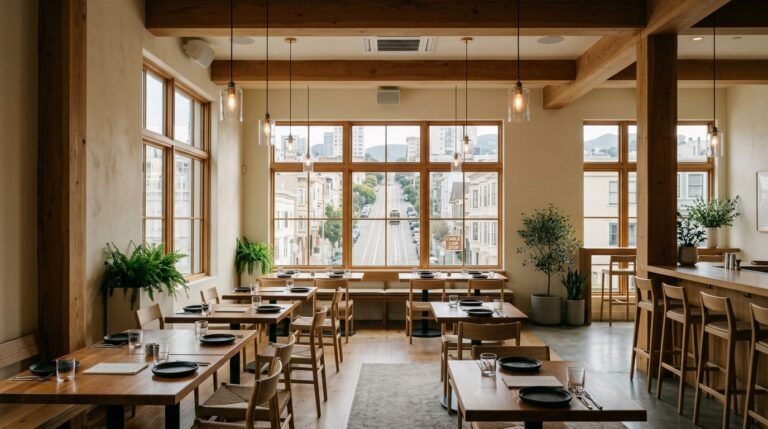
If you run a kitchen or a front-of-house in San Francisco, recipe costing and food cost control is no longer optional — it is one of the few levers left that actually moves margin in a market where tech-industry customer base. This guide is for executive chefs, head chefs, and sous chefs running busy kitchens who want AI to do the analytical heavy lifting that spreadsheets used to do badly.
We wrote it for chefs operating in San Francisco specifically — roughly 4,500 restaurants in a compact 47 square miles — because a generic “AI for restaurants” article misses the real operating conditions you face. Below you’ll find five AI Recipe Costing tools worth your attention in 2026, a hypothetical but realistic case study set in San Francisco, and the local considerations that change how these platforms should be deployed.
A data point to frame the stakes: target food cost for most full-service restaurants sits between 28-35% of revenue; a single point of overrun on $1M in sales costs $10,000 per year. For a chef in San Francisco, that is not abstract — it is the difference between a sustainable P&L and one quarter from closing.
AI Built for Chefs Who Want to Win in San Francisco
AI Chef Pro gives you 55+ AI tools — including Recipe Costing + Food Cost Calculator — calibrated for the real economics of San Francisco’s restaurant market.
Why Chefs in San Francisco Need AI Recipe Costing in 2026
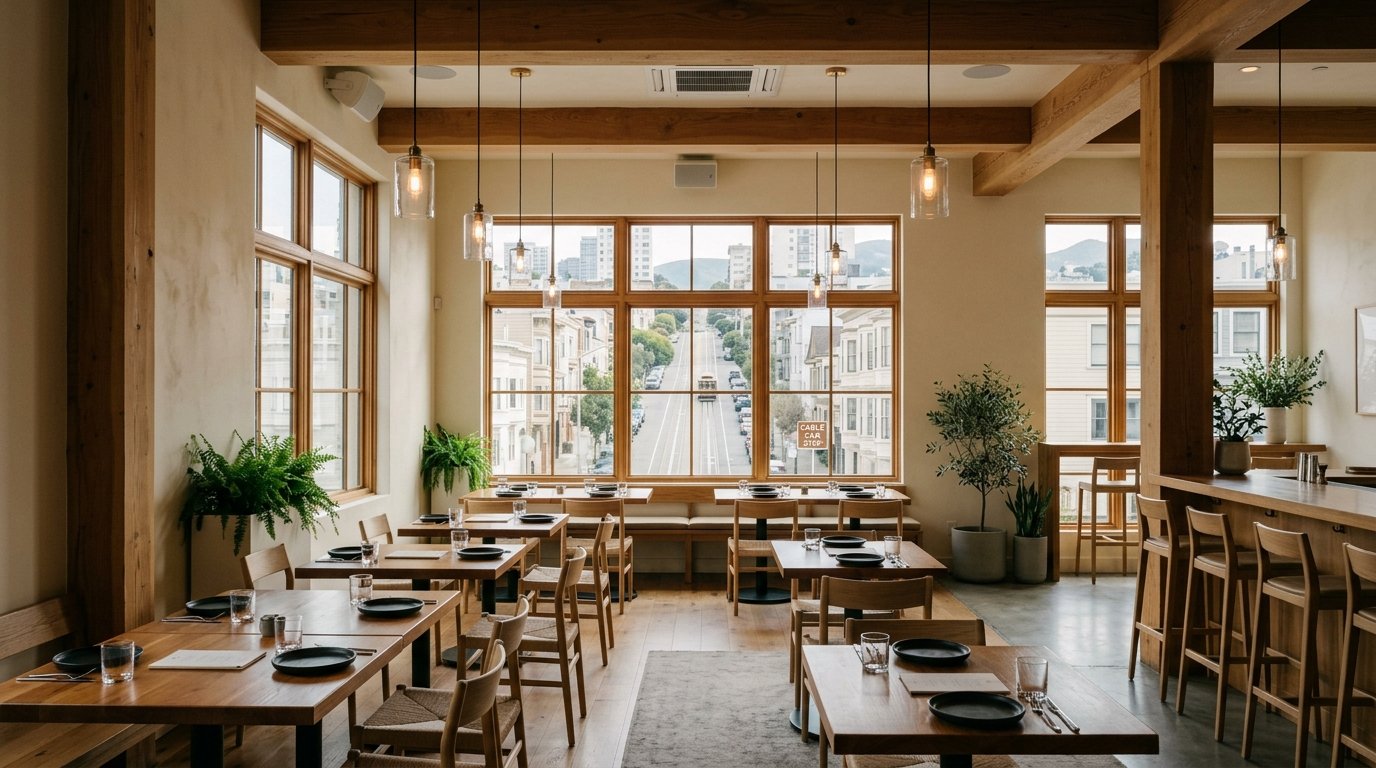
Running a kitchen in San Francisco means wrestling with some of the tightest margins in the country. The city’s $18.07 minimum wage (highest in the nation as of 2026) combined with premium real estate costs means every dollar of food cost matters more here than in most other markets. Yet most Executive Chefs and Sous Chefs I work with are still costing recipes with spreadsheets or—worse—gut instinct. With produce costs fluctuating weekly at the Ferry Building suppliers and labor taking up 30-35% of revenue, guessing on plate costs is a financial gamble you can’t afford.
The math gets ugly fast. When you don’t have real-time recipe costing, portion sizes drift between shifts, waste goes untracked, and menu engineering becomes guesswork. I’ve seen chefs discover they’ve been losing $3.50 per entree only after a month of bad tracking—by which point the damage to their bottom line is already done. In a city where a single location might need to clear $800,000 in annual revenue just to break even, that kind of blind spot is fatal.
AI recipe costing flips this completely. Instead of reactive damage control, you’re looking at proactive margin management. The target food cost for most full-service restaurants sits between 28-35% of revenue—and a single point of overrun on $1M in sales costs $10,000 per year. AI tools catch the drift before it becomes a five-figure problem, automatically adjust for seasonal price swings, and give you the data to actually engineer menus for profit without sacrificing your culinary vision.
5 AI Recipe Costing Tools for Chefs in San Francisco
Here’s how the current landscape shapes up for San Francisco chefs looking to bring AI into their costing workflow. I’ve tested these with actual kitchen teams across the Bay.
1. AI Chef Pro — Best Overall for Chefs in San Francisco
AI Chef Pro delivers the most comprehensive suite I’ve seen for the price point, and it’s built specifically with chefs in mind rather than being adapted from general business software. Their Recipe Costing + Food Cost Calculator pulls in live ingredient pricing, handles yield analysis automatically, and gives you real-time plate cost updates as supplier prices shift—which matters enormously when you’re sourcing from multiple vendors across the Bay Area. The platform includes 55+ AI tools beyond just costing, covering menu development, supplier negotiation, and kitchen workflow optimization. They offer a free tier with 10 uses per month (enough to test it properly on a few signature dishes), and the Pro plan runs $25/month with unlimited access. For a chef running one to three locations in San Francisco, this is the highest-ROI tool in the current market. AI Chef Pro also supports 7 languages, which is genuinely useful when managing diverse kitchen teams across the city.
2. Restaurant365 — Best for Multi-Unit Operators
Restaurant365 has strong accounting integration and works well for chefs managing multiple locations or working with ownership groups that need detailed financial reporting. The costing module is solid, and the back-of-house analytics help with inventory management across sites. The trade-off is complexity—it requires more setup time and training than a standalone tool, and the learning curve is steeper for kitchen-focused users who just want to cost a recipe quickly. For a solo chef-owner in the Mission or SOMA running a single location, it may be overkill. But if you’re scaling to a second or third spot in the Bay, the multi-unit visibility becomes valuable.
3. MarginEdge — Best for Inventory and Waste Tracking
MarginEdge shines at the inventory management side of the equation—they integrate directly with many major distributors and can pull invoice data automatically, which saves enormous time on weekly ordering. Their recipe costing is integrated into a broader inventory workflow, so you see how theoretical usage compares to actual waste in real time. The limitation is that the costing interface feels secondary to the inventory features; it’s functional but not as chef-friendly as tools built from the ground up for recipe development. San Francisco chefs dealing with high-waste menus (think farm-to-table concepts with lots of trim and prep) will appreciate the waste tracking, but may need to supplement with a more dedicated costing tool for R&D.
4. Toast — Best for Full-Service Restaurants Already on Toast POS
If your restaurant already runs on Toast POS (and in San Francisco, a significant chunk of full-service spots do), their built-in menu costing and food cost tracking tools are genuinely convenient. The integration with sales data means you see actual food cost percentages by item based on real movement, not just theoretical calculations. The downside is that the costing features are tied to the broader Toast ecosystem—you’re locked into their POS, and the pricing reflects that. For new openings or those evaluating POS systems, it’s a strong choice. For existing restaurants on different platforms, the switching cost doesn’t make sense just for costing.
5. meez — Best for Recipe Development and Scaling
meez positions itself as a “recipe management platform” rather than pure costing software, and that distinction matters for chefs who spend significant time on R&D. The interface is beautiful, the scaling features work flawlessly (critical for concepts expanding from one location to multiple), and it handles recipe costing alongside nutritional information and allergen tracking. The limitation is that it’s more expensive than dedicated costing tools—pricing starts higher than AI Chef Pro or Toast’s built-in options—and the AI features are more basic. For a chef in San Francisco developing a concept with growth potential, meez is worth the premium. For day-to-day operational costing on a tight margin, there are more cost-effective options.
A Hypothetical Case: A Chef in San Francisco Using AI Recipe Costing
Marcus Chen, Executive Chef at a 65-seat California-Mediterranean spot in the Marina District, was losing sleep over his food costs. After opening in early 2025, his actual food cost sat at 39%—four points above his target and eating into his labor budget. He was manually costing recipes in a Google Sheet, updating prices maybe once a month, and watching his sous chefs portion by eye between rushes.
He brought in AI Chef Pro in March 2025 and started inputting his 40-item menu. The tool flagged that his lamb loin dish—his signature—had drifted from a $12.40 plate cost to $14.18 over two months due to supplier price increases he hadn’t tracked. He adjusted the portion size by 1.5 ounces, swapped the garnish from fresh herbs to house-made oil, and ran the numbers: that single change recovered $2.10 per cover. At 85 covers per week, that’s $9,180 in annual savings. By June, his food cost sat at 32.1%, and he had the data to show his investor exactly where every dollar was going.
Local Realities: San Francisco-Specific Considerations for Chefs Adopting AI Recipe Costing
- Delivery platform fees are a hidden cost line item. DoorDash, Uber Eats, and Grubhub take 15-30% per order in San Francisco—factor these into your effective menu pricing, not just your in-house plate cost.
- Seasonal produce shifts pricing dramatically. The Ferry Building and Alemany farmers’ markets change prices weekly; AI costing tools that pull from your actual supplier invoices (not static databases) will save you from outdated numbers.
- Tip credit doesn’t exist in California. Unlike other states, you’re paying full minimum wage plus tips, so labor cost as a percentage of revenue is higher—making accurate food cost control even more critical to maintain overall margins.
- Tech-forward customers expect transparency. San Francisco diners are accustomed to seeing allergen info, sourcing details, and nutritional data on menus—your AI tool should export this seamlessly for menu design.
- Commercial rent in high-traffic neighborhoods (Marina, Hayes Valley, North Beach) can exceed $50/sqft annually. Your AI recipe costing needs to account for this reality in your menu engineering—higher-traffic locations need tighter food cost percentages to absorb rent.
Ready to run the math on your own recipe costing and food cost control?
AI Chef Pro starts free with 10 uses per month. Pro plan is $25/mo and unlocks unlimited analyses plus all 55+ tools. No credit card to start.
Frequently Asked Questions: AI Recipe Costing for Chefs in San Francisco
How much does AI recipe costing and food cost control software cost for chefs in San Francisco?
Entry-level AI recipe costing and food cost control tools for chefs in San Francisco typically range from free tiers up to USD 200 per month for a single location. AI Chef Pro offers a free tier with 10 uses per month and a Pro plan at $25/month that unlocks unlimited use of all 55+ tools. Enterprise tools (Restaurant365, Crunchtime) start around USD 200-500 per location per month.
How long before a chef in San Francisco sees ROI from AI Recipe Costing?
Most chefs in San Francisco see actionable output within the first week of using AI recipe costing and food cost control platforms. Financial ROI — measurable margin lift or cost reduction — usually shows within 30-90 days after implementing recommendations. The key variable is execution discipline, not software capability.
Is AI Chef Pro suitable for independent chefs in San Francisco, or only for chains?
AI Chef Pro is specifically designed for independent operators and small groups — its free tier and Pro plan at $25/month undercut enterprise platforms. Independent chefs in San Francisco who previously could not afford dedicated AI recipe costing and food cost control consultants now have access to equivalent analysis.
Does AI Recipe Costing software work with the POS systems common in San Francisco?
Most AI recipe costing and food cost control tools integrate with the major POS platforms used by chefs in San Francisco — Toast, Square, Lightspeed, Revel, TouchBistro and local variants. Before committing, verify the specific integration (sales data, modifiers, voids) with a free trial. AI Chef Pro supports manual CSV imports as a fallback for any POS.
What is the single biggest mistake chefs in San Francisco make when adopting AI Recipe Costing?
Treating it as a one-time project instead of a continuous discipline. Tech-industry customer base mean recipe costing and food cost control must be re-run at least quarterly — ideally monthly. Chefs who set it and forget it lose most of the value. AI Chef Pro’s automated recurring analysis fixes this specific problem.
Recipe Costing Made for Chefs — Not Generic Spreadsheets
Trained on real restaurant data, usable in minutes, integrated with the workflows chefs in San Francisco actually run.
Start AI Recipe Costing for Your Chef Business in San Francisco
The San Francisco restaurant market rewards operators who treat AI recipe costing and food cost control as standard practice, not a novelty. The tools reviewed above give chefs a genuine alternative to the legacy playbook of gut-feel pricing and quarterly spreadsheet audits. Target food cost for most full-service restaurants sits between 28-35% of revenue; a single point of overrun on $1m in sales costs $10,000 per year — that is the opportunity on the table.
If you are a chef in San Francisco and want to pilot AI Recipe Costing without procurement drama, start with AI Chef Pro’s free tier: 10 uses per month, no credit card, full access to the analysis engine. If it earns its keep in week one — which it typically does — the Pro plan at $25/month unlocks the full suite of 55+ AI tools built specifically for hospitality professionals. Try AI Chef Pro free at aichef.pro/en →
Related Reading
- AI Menu Engineering for Chefs in San Francisco
- AI Customer Retention for Chefs in San Francisco
- AI Recipe Costing for Chefs in New York
- AI Recipe Costing for Chefs in Los Angeles
- AI Recipe Costing for Chefs in Chicago
- 17 Best AI Tools for Chefs in 2026
- Best Menu Engineering Software 2026
Discover more from AI Chef Pro Blog
Subscribe to get the latest posts sent to your email.