
15 Digital Productivity Tools Every Professional Chef Needs in 2026
The modern professional kitchen runs on more than knives and fire. Digital tools have become as essential as a chef’s knife, transforming how culinary professionals approach everything from menu development to inventory management. As we move deeper into 2026, the integration of artificial intelligence and cloud-based platforms is no longer a luxury—it’s a competitive necessity. With 75% of chefs actively evaluating AI implementation for their operations, the question is no longer whether to adopt technology, but which tools will deliver measurable ROI for your kitchen.
The shift toward digital transformation in foodservice isn’t driven by trends alone. Economic pressures, labor challenges, and increasingly demanding guests have created a perfect storm that demands smarter workflows. Research indicates that the right chef productivity tools can reduce menu development time by 40-60% and cut food waste by 10-15%—numbers that directly impact your bottom line. Whether you’re running a single establishment or managing a multi-unit operation, leveraging the best digital tools for chefs isn’t optional anymore; it’s the difference between thriving and merely surviving.
This comprehensive guide cuts through the noise to present the 15 tools every professional chef needs in 2026. We’ve focused specifically on solutions that address real-world kitchen challenges: recipe management, labor scheduling, inventory control, and cost optimization. Unlike generic “best apps” lists that lump together consumer cooking apps with professional-grade software, this guide targets the unique needs of commercial kitchens, F&B directors, and restaurant owners. Each tool has been evaluated for its ability to deliver tangible productivity gains in high-pressure culinary environments.
55+ AI Tools Built for the World of Gastronomy
From recipe creation to menu engineering, food costing to allergen detection — AI Chef Pro covers every aspect of professional kitchen operations. Start free with 10 uses/month.
Why Digital Tools Matter More Than Ever in Professional Kitchens
The foodservice industry faces pressures that would overwhelm even the most talented chefs operating on instinct alone. Understanding these challenges contextualizes why investing in the right kitchen management software has become critical to operational success.
The labor shortage crisis remains one of the most significant challenges facing restaurant operators in 2026. The National Restaurant Association reports that staffing levels continue to lag behind pre-pandemic numbers, with certain positions seeing vacancy rates exceeding 30%. This means existing team members must work more efficiently, and kitchens need tools that reduce manual tasks, streamline communication, and minimize the learning curve for new hires. Digital platforms that automate scheduling, standardize recipes, and facilitate clear BOH-to-FOH communication directly address these staffing constraints.
Rising food costs require unprecedented precision management. With ingredient prices fluctuating dramatically due to supply chain disruptions, climate events, and geopolitical factors, the ability to track food cost in real-time has become essential. Traditional pen-and-paper costing methods simply cannot keep pace with these changes. Modern professional chef software enables instant recipe costing adjustments, automatic inventory alerts when prices shift, and data-driven menu engineering that maintains profitability without sacrificing quality.
Multi-unit operations demand standardization at scale. As restaurant groups expand, maintaining consistent quality across locations becomes exponentially more difficult. The solution lies in centralized recipe databases, standardized prep procedures, and unified inventory systems that ensure every location delivers the same guest experience. This is where cloud-based platforms truly shine, allowing executive chefs to update a recipe once and propagate those changes across all locations instantaneously.
Guest expectations for consistency and speed continue to escalate. Today’s diners expect perfect execution every time, with ticket times that would have seemed impossible a decade ago. Meeting these expectations requires precise mise en place, real-time communication between stations, and tools that eliminate the variables that lead to inconsistent outcomes. The best chef apps 2026 offers directly support these goals by providing the infrastructure for flawless execution.
Category 1: AI-Powered Recipe and Menu Management
The recipe development and menu management category has seen the most dramatic transformation thanks to artificial intelligence. These tools go beyond simple digital storage—they actively help chefs create, cost, and optimize their menus. For professional kitchens, the right platform can shave hours off recipe development while ensuring every dish meets your profitability targets.
1. AI Chef Pro — The All-in-One AI Suite for Gastronomy
AI Chef Pro represents a paradigm shift in how professional chefs approach recipe creation and kitchen management. Unlike point solutions that address single pain points, this platform offers 55+ AI-powered tools covering the entire spectrum of gastronomy professionals—from executive chefs and sous chefs to pastry chefs, bartenders, sommeliers, and F&B directors.
The platform’s eight specialized modules—Creative Cooking, Professional Recipes, Mise en Place, Menu Engineering, Business Concepts, Marketing & Presentation, Beverage Pairing, and Nutritional Science—provide targeted assistance for every aspect of culinary operations. A chef developing a new seasonal menu can leverage the creative tools to generate concepts, then immediately cost those recipes using built-in pricing algorithms, analyze allergen profiles, and generate kitchen prep sheets for their team.
What sets AI Chef Pro apart is its comprehensive approach. While competitors focus exclusively on home cooks or narrow segments of the professional market, AI Chef Pro explicitly serves the entire “world of gastronomy.” This broad yet deep functionality makes it particularly valuable for multi-talented professionals who need versatile tools that grow with their careers.
The pricing structure makes this accessible to kitchens at every stage: the free tier provides 10 uses per month, allowing chefs to test the full range of capabilities without financial commitment. The Pro plan at €25 monthly delivers 150 uses—representing a 300-500% monthly ROI for busy culinary professionals—while the Premium tier at €50 monthly offers 350 uses for larger operations. For a sous chef developing weekly specials, a line cook scaling recipes for prep, or an F&B director analyzing menu performance, AI Chef Pro delivers measurable productivity gains that justify the investment.
2. meez — Professional Recipe Management
meez has established itself as a leading solution for professional recipe management, scaling, and costing. Trusted by over 35,000 culinary professionals, the platform excels at the operational aspects of recipe management that are essential for multi-unit operations and high-volume kitchens.
The platform’s strength lies in its comprehensive approach to recipe data. Chefs can create detailed recipes with precise measurements, attach high-resolution photos, document procedural steps, and automatically scale yields based on party size or batch requirements. The costing functionality integrates seamlessly, pulling in current ingredient prices to calculate food cost percentages in real-time. This is invaluable for menu engineering decisions—understanding exactly how a 10% increase in avocado prices impacts your guacamole’s food cost allows for proactive menu adjustments.
For restaurant groups managing multiple locations, meez provides the standardization infrastructure essential for consistency. A corporate chef can develop recipes in the central database, and all locations access the same canonical versions. When ingredient prices change at one location, that information propagates through the system, enabling localized costing adjustments.
Pricing starts from $99 per month, positioning it in the mid-tier for professional-grade software. The primary limitation is its lack of AI creative tools—meez excels at operations and organization but doesn’t generate recipe concepts or assist with creative development. It’s best suited for kitchens that have established recipes and need robust management and costing capabilities.
3. ChefTec — Legacy Food Costing Software
ChefTec has maintained its position in the professional kitchen software market for over two decades, making it one of the longest-standing options available. The platform offers comprehensive recipe and menu costing, inventory control, and nutritional analysis capabilities that have served generations of chefs well.
The software provides robust functionality for recipe costing, with detailed ingredient databases and the ability to track price fluctuations over time. Nutritional analysis features support menu labeling requirements and health-conscious menu development. Inventory management modules help kitchens track par levels, generate order lists, and maintain tight control over food costs.
However, ChefTec’s longevity is also its primary weakness. The interface feels dated compared to modern cloud-based alternatives, and the software lacks AI capabilities that newer competitors offer. At pricing starting from $199 for a one-time purchase, plus ongoing costs for updates and support, it represents a significant investment that may not align with the forward-looking technology expectations of 2026.
For kitchens deeply embedded in the ChefTec ecosystem, migration costs might outweigh the benefits of switching. But for new adopters or those seeking modern functionality, the lack of AI integration and dated user experience make this a less compelling choice in the current landscape.
Category 2: Kitchen Operations and Communication
Efficient kitchen operations require more than great recipes—they demand seamless communication, intelligent scheduling, and real-time order management. This category addresses the workflows that keep the kitchen running smoothly during peak service.
4. 7shifts — Staff Scheduling and Labor Management
7shifts has become the industry standard for restaurant staff scheduling, serving over 250,000 restaurant professionals across the globe. The platform’s AI-powered scheduling functionality analyzes historical sales data to predict labor needs, automatically generating schedules that optimize coverage during peak periods while controlling labor costs.
The scheduling interface is intuitive, allowing managers to build schedules quickly while ensuring compliance with labor laws and union requirements. Employees access the platform through their own devices to view schedules, request time off, swap shifts, and communicate availability changes—reducing the administrative burden on kitchen managers significantly.
The labor cost analytics provide visibility into spending patterns, enabling data-driven decisions about staffing levels. Managers can see actual versus scheduled hours, track labor costs as a percentage of sales in real-time, and identify patterns that indicate inefficiencies. For multi-location operators, 7shifts provides the aggregated view necessary for consistent labor management across all units.
A free plan is available for single-location operations, making it accessible for independent restaurants. Paid plans unlock advanced features like AI scheduling and detailed analytics. For kitchens struggling with the complexity of scheduling around fluctuating demand, 7shifts delivers immediate value.
5. Kitchen Display Systems (KDS) — FreshKDS / QSR Automations
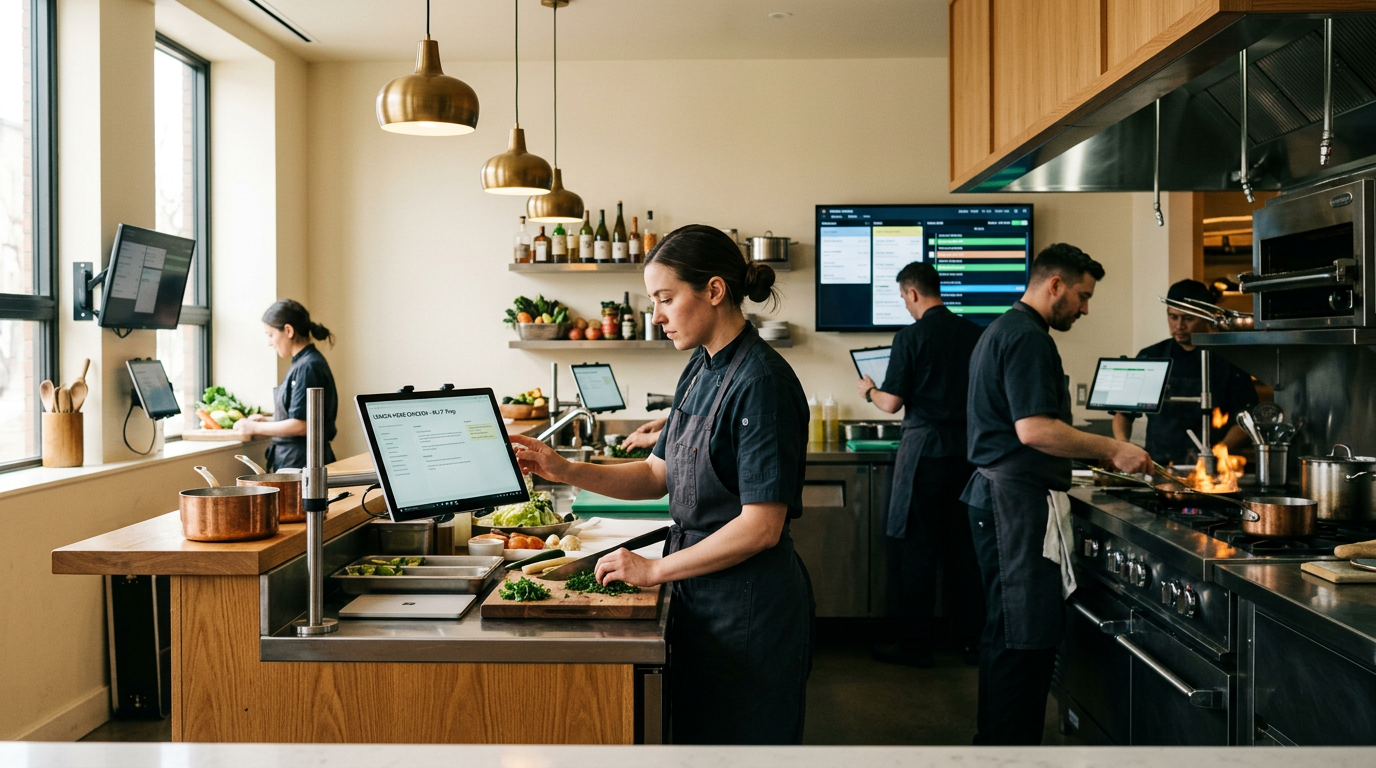
Paper tickets belong to a bygone era. Modern Kitchen Display Systems replace the traditional ticket rail with digital screens that transform how orders flow through the kitchen, improving accuracy, reducing ticket times, and providing valuable data about kitchen performance.
FreshKDS and similar KDS platforms display orders on touch-screen monitors positioned at each station. Orders appear instantly when the POS sends them, eliminating the delay between front-of-house order entry and back-of-house preparation. The system automatically prioritizes orders based on timing, displaying elapsed time prominently to encourage efficient execution. When a ticket approaches critical time thresholds, visual alerts prompt staff to prioritize.
The elimination of paper tickets provides multiple benefits: no more illegible handwriting causing errors, automatic routing to the correct stations, easy modification of orders in real-time, and comprehensive tracking of ticket times for performance analysis. Managers can review average ticket times by hour, identify bottlenecks, and make data-driven decisions about prep changes or staffing adjustments.
Integration with POS systems like Toast, Square, or Clover ensures seamless order flow. The screens themselves are typically commercial-grade touch displays designed to withstand the harsh environment of professional kitchens. For high-volume operations, KDS isn’t just an upgrade—it’s become essential infrastructure for competitive service.
6. Slack or Microsoft Teams — Kitchen Communication
While not specifically designed for restaurants, communication platforms like Slack and Microsoft Teams have become indispensable for modern kitchen operations. These tools provide the real-time communication infrastructure that connects BOH and FOH teams, ensuring everyone stays informed throughout service.
Dedicated channels can be created for different purposes: a “prep-list” channel where sous chefs post daily mise en place requirements, a “specials” channel where the chef de partie announces daily features, a “86’d” channel where line cooks alert servers when items are unavailable, and a “shift-notes” channel where closing crews leave critical information for opening teams. This organized structure ensures important information doesn’t get lost in the chaos of service.
The mobile accessibility is particularly valuable for kitchen staff who aren’t typically at desks during their shifts. Line cooks can check the prep list before arriving, sous chefs can review the next day’s specials on their commute, and managers can address issues remotely when away from the kitchen. Integration with other tools—receiving automated alerts when inventory hits par levels, or notifications when scheduling changes occur—creates a centralized hub for operational communication.
Both platforms offer free tiers sufficient for most restaurant operations, with paid upgrades available for larger teams requiring advanced features. The key is establishing clear communication protocols from the start—designated channels, expected response times, and guidelines about what deserves a message versus a verbal conversation.
Category 3: Inventory and Food Cost Control
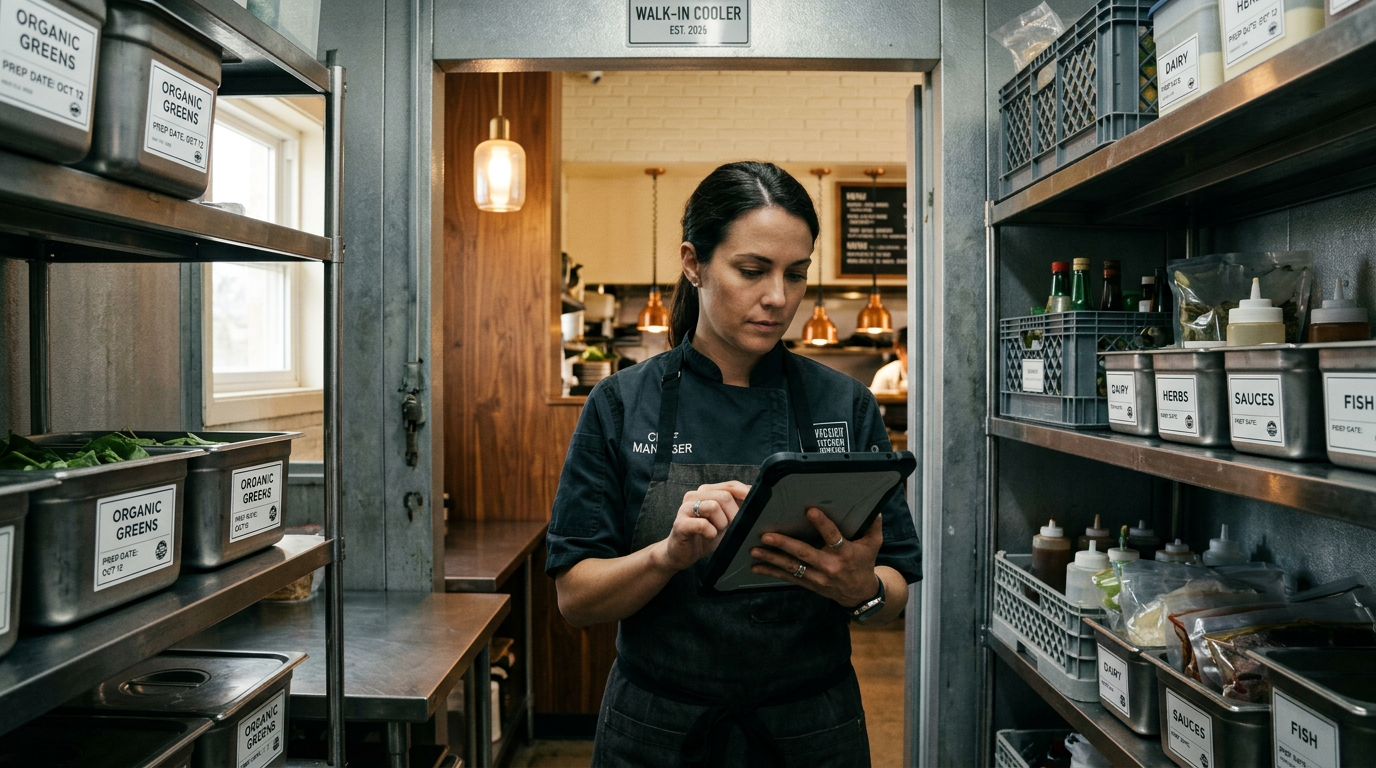
Food cost is the heartbeat of restaurant profitability, and modern inventory management tools provide the visibility and automation necessary to maintain healthy margins. These platforms address the critical function of tracking, ordering, and controlling the ingredients that flow through your kitchen.
7. MarketMan — Inventory Management
MarketMan provides comprehensive inventory management functionality designed specifically for the foodservice industry. The platform offers real-time inventory tracking, automated purchasing workflows, supplier management, and price comparison tools that together give chefs and operators unprecedented control over their food costs.
The inventory tracking system allows kitchens to maintain accurate counts of every ingredient on hand. Regular cycle counts become simpler when staff can quickly scan items and update quantities in the mobile app. The system tracks usage patterns, automatically calculating par levels based on historical consumption and upcoming reservations or events. When inventory falls below par, MarketMan generates suggested order quantities that managers can review and submit with minimal clicks.
Supplier management capabilities centralize relationships with all your vendors. Price comparison tools show historical pricing across suppliers, highlighting opportunities to negotiate better terms or switch vendors when prices shift. Integration with major POS systems means inventory updates automatically as items are sold, reducing the manual counting required to maintain accurate counts.
For multi-unit operators, MarketMan provides the consolidated view necessary for group-wide purchasing power and consistent inventory management practices. The analytics dashboard highlights variance, waste, and cost trends that might otherwise go unnoticed until they significantly impact profitability.
8. xtraCHEF by Toast — Automated Invoice Processing
xtraCHEF, now part of the Toast ecosystem, addresses one of the most time-consuming aspects of inventory management: invoice processing. The platform uses AI to photograph and extract data from supplier invoices automatically, transforming paper documents into actionable data without manual entry.
Staff simply photograph each invoice when it arrives—the AI extracts vendor name, line items, quantities, prices, and totals with remarkable accuracy. This data flows directly into the inventory and costing systems, updating food costs in real-time as price changes arrive. The automation eliminates the hours previously spent keying invoice data, while also reducing errors that plague manual entry.
Real-time food cost reporting provides immediate visibility into how price changes impact menu profitability. When a supplier announces a price increase, xtraCHEF calculates the impact across all recipes using that ingredient, enabling quick decisions about whether to absorb the increase, adjust portion sizes, or seek alternatives. For kitchens operating on thin margins, this timely information is invaluable.
Integration with Toast POS creates a seamless ecosystem for restaurants already using Toast for their point-of-sale needs. The combined platform provides end-to-end visibility from guest check to inventory reorder, streamlining operations for teams that want a unified technology stack.
9. BlueCart — Supply Chain Management
BlueCart offers a streamlined approach to supply chain management, providing a unified platform for ordering from multiple suppliers, tracking inventory, and managing the entire procurement workflow. The platform has processed billions of dollars in food orders, establishing itself as a significant player in the restaurant supply space.
The ordering interface simplifies what has traditionally been a fragmented process. Rather than maintaining separate relationships and ordering systems with each supplier, BlueCart provides a single platform where kitchens can order from all their vendors. The consolidated ordering reduces the time spent managing procurement, while also providing better visibility into total spending patterns.
Inventory tracking features keep teams informed about stock levels, with customizable alerts that notify managers when items approach reorder points. Cutoff time reminders ensure orders are placed before supplier deadlines, preventing the stockouts that disrupt service. The platform maintains order history, making it easy to reorder favorite items or reference past pricing when negotiating with suppliers.
For kitchens seeking to modernize their procurement process without the complexity of full-scale inventory management systems, BlueCart provides an accessible entry point. The platform handles the supplier relationships and ordering logistics, while still requiring kitchens to manage their own inventory counts—a reasonable trade-off for operations not ready for comprehensive inventory solutions.
Reduce Menu Development Time by 40-60%
Professional chefs using AI Chef Pro report 300-500% monthly ROI on the Pro plan. Generate recipes, scale ingredients, calculate food costs, and engineer your menu — all in one platform.
Category 4: Analytics, Reporting, and Business Intelligence
Running a profitable kitchen in 2026 requires more than just culinary skill—it demands data-driven decision making. These platforms turn raw numbers into actionable insights, helping you control food costs, optimize labor, and forecast with precision.
10. Restaurant365 — All-in-One Back Office
Restaurant365 has become the backbone for multi-unit operators who need real-time visibility across locations. This comprehensive platform combines accounting, inventory management, employee scheduling, and reporting in a single cloud-based system.
Key features:
- AI Recipe Scaling: How to Scale Any Recipe Perfectly with AI
- AI Food Cost Calculator: Reduce Restaurant Food Costs by 20%
- AI Menu Engineering Software: Optimize Your Menu for Profit
- Restaurant Menu Pricing Strategy with AI
- Best AI Tools for Chefs in 2026: Complete Comparison
- Break-Even Analysis for Restaurants with AI
Restaurant365 excels at connecting the back office to the kitchen. When your POS data flows directly into inventory and accounting, you get accurate food cost percentages without manual entry errors. The learning curve is moderate, but their onboarding team handles implementation for most operations.
Pricing: Starts at $199/month for single location; multi-location pricing available upon request.
11. Lineup.ai — AI-Powered Sales Forecasting
Lineup.ai uses artificial intelligence to predict daily sales by hour, taking the guesswork out of prep lists and labor scheduling. This tool analyzes weather patterns, local events, historical data, and even competitor trends to generate remarkably accurate forecasts.
Key features:
The ROI on accurate forecasting is immediate: overprep drops significantly when you know Tuesday lunch will be slow due to the local convention center hosting a competing event. Lineup.ai typically reduces food waste by 15-25% and helps operators schedule the right amount of labor for each service.
Pricing: Starts at $99/month per location; free trial available.
Category 5: Food Safety and Compliance
Health and safety compliance is non-negotiable in professional kitchens. These tools automate temperature monitoring, documentation, and HACCP planning—freeing your team to focus on food quality rather than paperwork.
12. FoodDocs — AI Food Safety Management
FoodDocs brings food safety into the digital age with AI-generated HACCP plans, digital monitoring logs, and smart temperature tracking. The platform learns your operation’s specific risks and creates customized safety protocols.
Key features:
What makes FoodDocs revolutionary is its ability to adapt to your specific menu. Upload your recipes, and the system identifies potential hazards, establishes critical control points, and builds compliant documentation automatically. Health inspectors consistently praise the clarity and completeness of FoodDocs-generated records.
Pricing: Starts at $49/month for single location; enterprise plans available.
13. Thermoworks / ComplianceMate — Digital Temperature Monitoring
Wireless temperature monitoring has evolved from manual log sheets to automated cloud-based systems. Thermoworks and ComplianceMate lead this category with industrial-grade probes that monitor walk-ins, reach-ins, freezers, and cooking equipment 24/7.
Key features:
The financial case for digital temperature monitoring is compelling: a single walk-in compressor failure can result in $10,000+ in spoiled inventory. Early alerts from these systems give you time to intervene before disaster strikes. Most insurance providers offer premium discounts for operations using automated monitoring.
Pricing: Thermowstarts at $199 for hardware plus $29/month; ComplianceMate pricing varies by deployment size.
Category 6: Guest Experience and Front-of-House Integration
The best kitchens in 2026 are fully integrated with guest experience systems. These tools connect reservation data, guest preferences, and real-time feedback directly to your kitchen team—enabling personalized service at scale.
14. OpenTable or Resy — Reservation Management
OpenTable and Resy dominate the reservation landscape, with OpenTable holding approximately 60% of the US market and Resy strong in major metropolitan areas. Both platforms have evolved far beyond simple table bookings into sophisticated guest intelligence systems.
Key features:
The kitchen integration aspect is particularly valuable. When your reservation system communicates predicted covers to your prep team, you can adjust par levels in real-time. Both platforms now offer “kitchen display” integrations that show upcoming VIP guests, allergy alerts, and special requests directly on the line.
Pricing: OpenTable: $39/month per location plus $1 per cover over 30; Resy: similar pricing structure with variations by market.
15. Zonka Feedback — Real-Time Guest Feedback
Zonka Feedback captures guest satisfaction at the exact moment of experience—right at the table, before the guest leaves. This immediate feedback loop creates unprecedented opportunities for kitchen improvement.
Key features:
The power of real-time feedback lies in its immediacy. A guest who receives their appetizer and finds it cold can report it immediately—giving you the chance to remake the dish before they leave. Over time, aggregate data reveals which dishes consistently underperform, which stations are creating issues, and how menu changes impact satisfaction scores.
Pricing: Starts at $29/month for single location; enterprise pricing available.
Comparison Table: All 15 Tools at a Glance
| Tool | Category | Best For | AI-Powered? | Starting Price |
|---|---|---|---|---|
| AI Chef Pro | Recipe & Menu Development | AI-powered recipe creation, costing, and menu engineering | Yes (55+ AI tools) | Free (10 uses/month) |
| meez | Recipe & Menu Development | Recipe standardization and scaling for growing operations | Partial | $49/month |
| ChefTec | Recipe & Menu Development | Comprehensive recipe management with nutritional analysis | No | $199/month |
| 7shifts | Labor Scheduling | Employee scheduling, time tracking, and labor cost control | Partial | $49/month |
| KDS (Kitchen Display System) | Kitchen Operations | Real-time order communication and ticket management | No | $99/month |
| Slack | Team Communication | Internal team communication and task coordination | Partial (AI features) | Free tier available |
| MarketMan | Inventory Management | Purchase orders, inventory tracking, and vendor management | Partial | $99/month |
| xtraCHEF | Inventory Management | Invoice processing and inventory automation | Yes | $149/month |
| BlueCart | Inventory Management | Online ordering platform connecting restaurants with suppliers | Partial | Free (commission-based) |
| Restaurant365 | Analytics & BI | All-in-one back office accounting and reporting | Partial | $199/month |
| Lineup.ai | Analytics & BI | AI-powered sales forecasting and labor optimization | Yes | $99/month |
| FoodDocs | Food Safety & Compliance | AI-generated HACCP plans and compliance documentation | Yes | $49/month |
| Thermoworks / ComplianceMate | Food Safety & Compliance | Automated temperature monitoring and alerts | No | $29/month |
| OpenTable / Resy | Guest Experience | Reservation management and guest intelligence | Partial | $39/month |
| Zonka Feedback | Guest Experience | Real-time guest satisfaction surveys and analytics | Partial | $29/month |
How to Choose the Right Stack for Your Kitchen
With 15 excellent tools across six categories, the temptation is to implement everything at once. That approach almost always fails. Here’s how to build your digital stack strategically:
Start with the Biggest Pain Point
Identify your operation’s most urgent challenge. Is food cost running too high? Start with inventory management (MarketMan, xtraCHEF, BlueCart) and recipe costing (AI Chef Pro, meez). Struggling with labor scheduling and overtime? 7shifts delivers immediate ROI. Guest complaints about consistency? Focus on recipe standardization first.
Consider Integration Compatibility
Your tools should talk to each other. Before committing to any platform, verify it integrates with your existing POS and other essential systems. Restaurant365 and xtraCHEF excel at integration, while some niche tools operate in silos. A disconnected tech stack creates more work than it solves.
Begin with Free Tiers Before Committing
Most restaurant software offers free trials or freemium tiers. AI Chef Pro provides 10 free uses monthly—enough to test AI recipe generation and costing. Slack’s free tier handles team communication for most operations. Use these free options to validate fit before budgeting for premium features.
Recommended Starting Stack
For most professional kitchens, I recommend this core stack:
Add categories incrementally as your team adapts. The goal is sustainable improvement, not technology overwhelm.
Frequently Asked Questions
What are the most important digital tools for a professional chef?
The most essential digital tools for professional chefs in 2026 fall into four categories: recipe management (AI Chef Pro, meez, ChefTec) for standardization and costing; operations and scheduling (7shifts, KDS) for workflow efficiency; inventory management (MarketMan, xtraCHEF, BlueCart) for cost control; and communication (Slack) for team coordination. These four pillars address the daily challenges that consume most chef’s time.
How much do chef productivity tools cost?
Pricing varies significantly by category and scale. Entry-level tools like Slack offer free tiers. Recipe management software starts around $49/month (meez), while comprehensive platforms like Restaurant365 begin at $199/month. AI Chef Pro offers the best value with a free tier providing 10 uses monthly—sufficient for testing—while premium plans unlock full functionality. Most tools offer per-location pricing, with discounts for annual commitments.
Can small restaurants benefit from kitchen management software?
Absolutely. Small operations often benefit more than large chains because they have less margin for error. A single recipe costing mistake on a high-volume item compounds quickly. Tools like AI Chef Pro’s free tier, Slack for team communication, and KDS for order management deliver enterprise-level benefits at startup-friendly prices. The key is starting with the most critical pain point rather than implementing everything simultaneously.
Do I need technical skills to use chef apps?
Modern restaurant software is designed for culinary professionals, not IT specialists. Most platforms feature intuitive interfaces, mobile apps for on-the-go access, and comprehensive onboarding support. The technical barrier has dropped significantly since 2020. That said, some platforms (particularly enterprise accounting tools like Restaurant365) have steeper learning curves. Look for vendors offering dedicated onboarding and customer success support.
Which tools offer free plans for restaurants?
Several tools offer free tiers suitable for small operations: AI Chef Pro provides 10 free uses monthly with no time limit. Slack’s free tier handles most team communication needs. BlueCart operates on a commission model, making it effectively free for restaurants (suppliers pay the commission). OpenTable and Resy charge per-cover fees but offer reduced rates for independent restaurants in some markets. Most premium tools offer 14-30 day free trials before requiring payment.
How do AI tools help reduce food cost in restaurants?
AI tools reduce food costs through multiple mechanisms: accurate recipe costing prevents underpricing menu items; predictive forecasting (Lineup
Related Reading
Discover more from AI Chef Pro Blog
Subscribe to get the latest posts sent to your email.