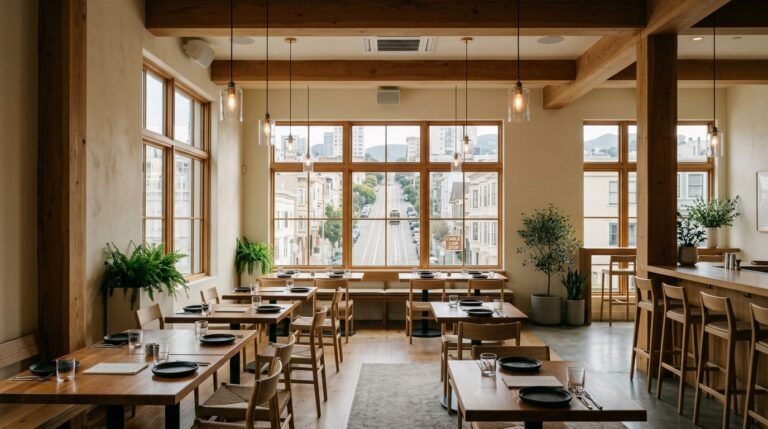
Menu pricing is the single biggest lever for restaurant profitability. Yet most establishments still rely on gut feeling, competitive observation, or simple cost-plus calculations when setting prices. This approach leaves thousands of dollars on the table every year—money that could be reinvested in staff, ingredients, or expansion.
Artificial intelligence is fundamentally changing how forward-thinking restaurants approach pricing. By analyzing demand patterns, seasonality, competitor pricing, weather conditions, and customer behavior in real-time, AI-powered pricing tools can identify price points that maximize revenue without sacrificing customer loyalty. The results speak for themselves: restaurants implementing ai menu pricing strategy solutions have reported sales increases of up to 40% during peak hours.
The industry is paying attention. According to recent research, 38.75% of restaurant executives are already investing in AI and machine learning technologies, with an additional 48% planning to adopt these solutions within the next two years. If you’re not yet using data-driven menu pricing, your competitors almost certainly are—or soon will be. This comprehensive guide breaks down exactly how dynamic menu pricing restaurant systems work, why traditional methods fail, and which strategies deliver measurable ROI.
Stop Guessing Your Menu Prices
AI Chef Pro gives you 55+ AI tools built for gastronomy — including menu engineering, food cost analysis, and pricing optimization. Free tier available.

Why Traditional Menu Pricing Falls Short
For decades, restaurant owners have relied on pricing methods that seemed reasonable but actually underperform in today’s complex market. Understanding these limitations is the first step toward embracing smarter pricing strategies.
Cost-plus markup ignores demand and willingness to pay. The classic approach—adding a fixed percentage to food costs—fails to account for what customers actually value. A perfectly executed ribeye steak costs roughly the same to produce whether you serve it in a casual diner or an upscale steakhouse, yet customers willingly pay dramatically different prices. Cost-plus pricing leaves significant revenue on the table when demand supports higher prices.
“Round number” pricing leaves money on the table. Many restaurants default to prices ending in .00 or .99, believing these create psychological simplicity. However, AI-driven analysis often reveals that seemingly arbitrary price points like $17.50 or $23.95 can increase order conversion rates without reducing perceived value. These micro-optimizations compound significantly over thousands of transactions.
Static pricing can’t respond to ingredient cost fluctuations. Produce, proteins, and dairy prices swing dramatically with seasons and supply chain disruptions. Restaurants using fixed menus often wait months to adjust, eroding margins during cost spikes and missing opportunities to capitalize on lower input costs.
Competitive pricing without data is just guessing. Scanning competitor menus and pricing slightly below them provides no insight into whether those competitors are actually profitable at those prices—or whether customers perceive your restaurant as a value option or a premium experience.
The financial impact of these limitations is substantial. Consider a single example: a mid-range restaurant serving 40 covers per night on a $24 steak could potentially charge $27 based on demand analysis showing customers consistently choose it over cheaper alternatives. That’s $3 additional profit per cover, or $120 per night. Over a typical 365-day operation, that single dish generates $43,800 in extra annual revenue—without serving a single additional customer.
What Is AI Menu Pricing?
AI menu pricing refers to the application of machine learning algorithms and predictive analytics to determine optimal prices for menu items. Unlike simple automation, these systems continuously learn from data, improving their recommendations over time.
Modern data-driven menu pricing systems analyze dozens of variables simultaneously:
- Demand patterns: Historical sales data reveals which items sell during specific times, days, and seasons
- Time of day and day of week: Lunch versus dinner, weekdays versus weekends each have distinct pricing opportunities
- Weather conditions: Temperature, precipitation, and forecasts affect customer behavior and menu preferences
- Local events: Sports games, concerts, conventions, and holidays create demand spikes that support premium pricing
- Ingredient costs: Real-time connection to supplier pricing enables automatic margin protection
- Competitor pricing: Continuous monitoring of nearby restaurants and delivery platforms
- Customer segments: Regulars versus first-time visitors, business diners versus families each respond differently to pricing
- Order method: Dine-in, takeout, and delivery often warrant different price points due to different cost structures
It’s crucial to understand that AI pricing is not the same as “surge pricing” or price gouging. Airlines and hotels have used dynamic pricing for decades, but their implementation often feels opaque to consumers. Menu price optimization in restaurants focuses on strategic pricing that balances revenue growth with customer retention. The goal is finding the price point where both profitability and customer satisfaction are maximized—not extracting maximum revenue from every transaction.
Modern AI pricing tools can be applied to entire menus or focused on specific high-impact items. Many restaurants begin by optimizing their top 10 revenue-generating dishes before expanding to full-menu optimization. Platforms like AI Chef Pro offer comprehensive pricing tools that integrate with existing POS systems, making implementation straightforward even for operators without technical backgrounds.
The Menu Engineering Matrix: AI’s Starting Point
Before implementing AI pricing, restaurants should understand the menu engineering matrix—a framework that categorizes dishes based on profitability and popularity. This matrix provides the strategic foundation upon which AI builds its optimization recommendations.
Stars are high-profit items that also rank among your most popular dishes. These are your crown jewels—dishes that customers love and that contribute significantly to margins. AI recommendations for stars typically involve maintaining current prices or implementing very modest increases, as price sensitivity is higher on items customers order frequently.
Puzzles are high-profit items with low popularity. These represent untapped potential. AI helps reposition these dishes through strategic repricing, menu description improvements, or placement changes. A puzzle item might simply be priced too high for its perceived value, or customers may not understand what makes it special.
Plowhorses are low-profit items with high popularity. These are your workhorses—they drive traffic but don’t contribute proportionally to profitability. AI pricing optimization excels here, identifying whether modest price increases are feasible without losing customer loyalty, or whether portion adjustments or ingredient substitutions could improve margins while maintaining perceived value.
Dogs are low-profit, low-popularity items that represent candidates for removal or reinvention. AI analysis can determine whether a dog might become a puzzle with different pricing, or whether it’s simply taking up menu real estate that could be devoted to more promising dishes.
The traditional menu engineering matrix relies on periodic manual analysis—typically quarterly or annually. AI transforms this process by adding dynamic data layers: real-time sales velocity, price elasticity measurements, and predictive modeling of how changes to one dish affect ordering patterns across the entire menu. Rather than snapshots, restaurants get continuous optimization.
5 AI Menu Pricing Strategies That Work
Implementation of ai restaurant pricing technology takes several forms, each suited to different restaurant types and operational priorities. Here are five proven strategies that deliver measurable results.
Strategy 1: Demand-Based Dynamic Pricing
Demand-based dynamic pricing adjusts menu prices throughout the day based on real-time analysis of customer traffic and ordering patterns. This isn’t the same as surge pricing—it’s strategic optimization that raises prices slightly during genuine peak periods while offering promotions during slower times.
The implementation works by analyzing historical sales data to identify patterns: Tuesday lunch might be consistently slow while Thursday dinner sees predictable overflow. AI systems can automatically adjust prices within predetermined ranges, ensuring consistency while capturing revenue that static pricing leaves behind.
Happy hour represents an ideal use case. Rather than arbitrarily setting discount periods, AI analyzes actual traffic patterns to determine optimal timing. If your restaurant sees a 3pm lull but strong late-afternoon traffic, AI might recommend shifting happy hour to capture both the slow period and the pre-dinner crowd. Restaurants implementing demand-based dynamic pricing have documented up to 40% increases in revenue during peak hours by ensuring pricing reflects actual demand.
For implementation, restaurants need sufficient data history—typically three to six months of sales data provides enough for meaningful pattern recognition. Newer establishments can use industry benchmarks while building their own datasets.
Strategy 2: Ingredient Cost-Responsive Pricing
Food costs represent the largest variable expense in restaurant operations, and ingredient prices fluctuate constantly. AI-powered ingredient cost-responsive pricing automatically adjusts menu prices when supplier costs change, protecting margins without requiring manual intervention.
Consider guacamole: when avocado prices spike—as they do seasonally—restaurants face a difficult choice. Absorb the cost increase and watch margins evaporate, raise prices abruptly and confuse customers, or remove the item entirely. AI systems can address this proactively.
Advanced implementations connect directly to supplier systems, receiving real-time price updates. When avocado costs increase by 15%, the AI evaluates price elasticity data for guacamole—how have previous price changes affected orders?—and recommends an appropriate adjustment. Alternatively, the system might suggest a temporary substitution (salsa macha, roasted tomato salsa) that maintains customer satisfaction while protecting margins.
This strategy integrates seamlessly with inventory management systems. When AI detects that a key ingredient is approaching its optimal use-by window, it can recommend promotional pricing to move inventory while it’s fresh—reducing waste while generating revenue that would otherwise be lost.
Strategy 3: Psychological Price Optimization
Consumer psychology plays a massive role in purchasing decisions, and AI excels at testing and identifying optimal price points based on behavioral data. This goes far beyond the simple “charm pricing” ($9.99 instead of $10.00) that retailers have used for decades.
Charm pricing remains effective in restaurants, but AI can determine which items respond to this technique and which might actually lose orders from the perceived discount. A premium steakhouse might find that $45 looks more appealing than $44.95, while a fast-casual concept might see better results with charm pricing on entrée bowls.
Anchor pricing involves presenting high-priced options to make mid-range choices seem more reasonable. AI can test different anchor configurations—for instance, whether listing a $42 lobster option makes the $28 fish-and-chips appear like a bargain, or whether it simply drives customers toward competitors.
Decoy pricing structures menus with intentional options designed to steer customers toward specific choices. AI analyzes which decoy configurations maximize average ticket size without reducing overall conversion rates.
Perhaps most intriguingly, AI can analyze menu layout and item positioning. Eye-tracking studies have shown that customers’ gazes naturally settle on certain areas of menus—typically the upper right and center. AI can recommend which high-margin items should occupy these premium positions.
One documented case study: a casual dining restaurant moved a high-margin pasta dish from $22 to $21.50 and repositioned it in the “featured” section. The combination of charm pricing and placement optimization increased orders for that specific dish by 18%—representing significant revenue growth with no change in food costs.
Strategy 4: Channel-Based Pricing
Restaurants increasingly operate across multiple channels—dine-in, takeout, and delivery—and each channel carries different cost structures and customer expectations. Dynamic menu pricing restaurant strategies must account for these differences.
Delivery platforms like DoorDash, Uber Eats, and Grubhub charge commissions ranging from 15% to 30% per order. Restaurants that price their delivery menu identically to their dine-in menu effectively subsidize third-party logistics with dine-in margins. AI can calculate the true cost of each channel and recommend channel-specific pricing.
Typical implementations add a 15-20% premium to delivery menu prices, offsetting platform commissions while remaining competitive with other delivery options in the area. The premium accounts not just for commissions but also for packaging costs, payment processing fees, and the increased likelihood of comps and complaints in delivery orders.
However, channel-based pricing requires nuance. AI analyzes customer behavior across channels: do delivery customers order differently than dine-in customers? Are they more price-sensitive or less? Some restaurants find that delivery customers are actually less price-sensitive (they’re paying for convenience) and can bear higher premiums. Others discover that delivery customers compare prices aggressively and must maintain tighter parity.
AI optimizes the premium per channel based on local competitive dynamics. In areas with many delivery options, price sensitivity is higher. In food deserts or during inclement weather, customers tolerate—and expect—delivery premiums.
Strategy 5: Seasonal and Event-Based Optimization
Restaurants exist within dynamic local ecosystems—sports schedules, concert calendars, convention cycles, and weather patterns all influence customer behavior. AI pricing strategies that account for these factors capture revenue that static pricing misses.
Seasonal demand shifts affect nearly every restaurant type. A waterfront seafood restaurant sees different demand in July than January. A ski area lodge operates in winter but may struggle in shoulder seasons. AI analyzes multi-year data to predict these patterns and recommend proactive menu adjustments—perhaps introducing seasonal specials that command different price points, or adjusting core menu prices to match expected demand.
Local event detection represents a powerful AI capability. When a major concert comes to town, or the local team makes the playoffs, demand surges. Restaurants without AI pricing may simply see longer wait times—missing the opportunity to capture premium revenue from customers who demonstrated willingness to pay more by choosing a busy establishment. AI can automatically adjust prices upward during predicted high-demand events, then return to standard pricing when the event passes.
Weather-responsive pricing adjusts to customer behavior patterns. On cold, rainy days, comfort food items can support modest price increases—customers seeking warmth and comfort are less price-sensitive. Conversely, hot days might warrant promotional pricing on lighter fare or cold beverages to drive traffic.
Holiday and special occasion premiums work similarly. Valentine’s Day, Mother’s Day, and New Year’s Eve all command premium pricing in restaurants. AI can identify which holidays matter for your specific concept and customer base, and recommend appropriate pricing adjustments—then automatically revert to standard pricing afterward.
How to Implement AI Menu Pricing in Your Restaurant
You’ve got the strategy. Now let’s talk execution. Implementing AI menu pricing doesn’t require ripping up your entire menu or overnight price changes. Here’s your roadmap to get it done right.
Step 1: Audit Your Current Menu Performance
Before you can price smarter, you need to know where you stand. This is where most operators skip steps—and leave money on the table.
Categorize every item using the menu engineering matrix:
- Stars — High popularity, high margin. These are your anchors. Protect them at all costs.
- Plow Horses — High popularity, low margin. Maybe raise prices, maybe reformulate, maybe de-emphasize on the menu.
- Puzzles — Low popularity, high margin. Can you market these better? Or are they just not clicking with guests?
- Dogs — Low popularity, low margin. Cut or reinvent. No room for passengers.
Calculate current food cost percentage per item: This is non-negotiable. If you don’t know your actual food cost per dish, you’re pricing blind. Use your POS reports, your invoices, your recipe costing sheets. Get the number.
Identify your top 10 revenue items and top 10 margin items: You’re looking for overlap. When your revenue drivers and margin drivers align, that’s where your pricing power lives.
Step 2: Choose Your AI Pricing Tool
Not all AI pricing tools are created equal. Here’s how to match your needs to the right platform:
AI Chef Pro — aichef.pro/en
- 55+ AI tools including dedicated menu engineering and pricing analysis
- Free tier: 10 uses/month (enough to get started)
- Pro plan: €25/month
- Best for: Independent operators and small chains who want a complete toolkit
Fourth iQ: Enterprise-level analytics with deep labor scheduling integration. Best for multi-unit operators who need system-wide visibility.
Lineup.ai: Sales forecasting that directly informs pricing decisions. Great for high-volume concepts where demand prediction drives the bus.
eatOS: AI menu pricing built directly into the POS. Best for operators who want everything in one system.
Quick comparison by restaurant size:
- Small independent (1-3 locations): AI Chef Pro
- Growing chain (4-10 locations): eatOS or Lineup.ai
- Multi-unit enterprise (10+ locations): Fourth iQ
Step 3: Set Your Pricing Guardrails
AI is powerful, but it’s not the boss—you are. Before you let any algorithm touch your prices, set your boundaries:
Maximum price increase per period (5-10%): Any more than this and you’ll shock your regulars. Phase increases in gradually.
Minimum margin thresholds: Set a floor. If an item drops below your target food cost percentage, flag it for review.
Customer perception limits: Know your positioning. A premium steakhouse can absorb higher prices than a neighborhood café. Don’t price yourself out of your own market.
Competitive range boundaries: Stay within striking distance of your direct competitors. Being 20% more expensive than the place across the street is a hard sell.
Step 4: Test and Iterate
Don’t boil the ocean. Start small, measure, then scale.
A/B test pricing on 3-5 items first: Pick items that aren’t your core anchors—maybe a couple of appetizers and a dessert. Change the price on one location or one daypart if you can.
Measure what matters:
- Revenue per cover — Did it go up?
- Order frequency — Are people still ordering it?
- Customer feedback — Are you getting complaints?
Adjust over 2-4 week cycles: Give the data time to settle. One weekend’s numbers aren’t a trend.
Scale to full menu once validated: Once you’ve proven the concept works on your test items, roll it out systematically.
Already Tracking Food Cost Manually?
AI Chef Pro automates menu engineering, recipe scaling, and cost analysis — so you can focus on cooking, not spreadsheets. Plans from €25/month.
Real-World Results: AI Menu Pricing ROI
Let’s talk numbers. Because at the end of the day, that’s what matters.
Industry benchmarks: Restaurant profit margins typically run 3-9% depending on concept:
- Full service restaurants: 3-5% net margin
- QSR and fast casual: 6-9% net margin
What AI pricing typically delivers: 2-5 percentage point margin improvement. That might not sound like much, but let’s do the math.
For a restaurant doing $1M annual revenue (roughly $2,740/day at 65% capacity):
- 3% margin improvement = $30,000/year additional profit
- 5% margin improvement = $50,000/year additional profit
That’s a new car. Or a staff bonus. Or marketing budget that actually moves the needle.
Time savings:
- Manual pricing analysis: 8-10 hours/month
- AI-assisted analysis: 30 minutes/month
That’s 90+ hours per year you’re getting back. What would you do with that time?
Reduced food waste through better demand prediction: 10-15% reduction in waste costs. When you know what’s going to sell, you order accordingly.

AI-Driven Dynamic Menu Pricing: The Restaurant Revenue Management Playbook
For decades, airlines and hotels have mastered the art of charging what the market will bear—adjusting room rates and flight tickets in real time based on demand, seasonality, and competitive pressure. Yet the restaurant industry has largely clung to static menus, printing laminated pages that remain unchanged for months or even years. This approach leaves significant revenue on the table. AI-driven menu optimization changes the game by enabling restaurants to implement dynamic pricing strategies previously reserved for hospitality giants, all while maintaining the brand consistency guests expect.
Modern AI systems can modulate menu pricing across three interconnected dimensions, creating a sophisticated revenue management system that responds to real-time market conditions:
- Time-of-day pricing — Adjusting rates during happy hour, early bird specials, or peak dinner rush periods to maximize covers during slower windows and reward off-peak visits
- Day-of-week pricing — Recognizing that Mondays are fundamentally different from Saturday nights in customer behavior and willingness to pay
- Demand-based pricing — Responding to local events, weather patterns, reservation density, and even predicted foot traffic from nearby attractions or office buildings
Here’s how these dimensions translate into measurable revenue impact:
| Dimension | Traditional Restaurant | AI-Driven Restaurant | Typical Revenue Uplift |
|---|---|---|---|
| Time-of-day | Fixed prices all day | Dynamic pricing with happy hour and surge pricing | +2-5% |
| Day-of-week | Fixed prices every day | Weekly pricing curves (Mon-Thu vs Fri-Sat) | +3% |
| Event-based | Manual “Super Bowl special” creation | Predictive auto-adjust for local events | +5-8% |
| Weather | Ignored entirely | AI correlates rain → delivery surge, adjusts accordingly | +4-6% |
| Competitor benchmarking | Manual research yearly | Continuous monitoring and adjustment | +3-5% |
Fine-dining and full-service restaurants must implement these strategies with nuance. The goal isn’t to raise base menu prices—guests notice and resent that—but rather to introduce intelligent modifiers that reflect actual cost fluctuations and demand spikes. A “prime time surcharge” during Saturday night dinner rush or an “off-peak promotion” offering 15% off for Tuesday dining both leverage dynamic pricing restaurants employ while preserving perceived value. The key is transparency: when guests understand why prices fluctuate, acceptance rates remain high.
For restaurants exploring how restaurants use AI for dynamic pricing or revenue management, the entry point doesn’t require a complete menu overhaul. Many operators start with a single dimension—perhaps time-of-day pricing for happy hour—then expand as the system proves its ROI. The data accumulates, the algorithms learn your specific market, and the revenue improvements compound over time.
Competitive Menu Pricing Intelligence: What AI Sees That You Miss
Most independent restaurants set prices based on their own food costs plus a gut feeling about what local competitors charge. This approach, while understandable, leaves a critical blind spot: zero systematic data on how rival menus evolve over time. When the Italian bistro three blocks away quietly raises their margherita pizza from $14 to $16, you likely won’t know until a guest mentions it—or worse, until you lose that guest to what they perceive as better value elsewhere. Menu pricing data competitors collect reveals these gaps in real time.
AI-powered competitive pricing tools transform this reactive posture into a strategic advantage by automating the entire intelligence-gathering process:
- Continuous menu scraping — Monitoring nearby restaurant menus across delivery apps, websites, and online ordering systems around the clock
- Semantic item matching — Using natural language processing to recognize that “margherita pizza” at one restaurant equals “classic tomato basil pizza” at another, even when naming conventions differ
- Price gap alerts — Identifying where your prices sit relative to the local market, flagging both overpricing and underpricing opportunities
- Competitive move notifications — Detecting competitor price changes within 24 hours and alerting you to respond strategically
Why Item Matching Is Hard (and Why It Matters)
Here’s the core challenge that has frustrated restaurant operators for years: existing tools simply can’t match menu items accurately. One restaurant calls it “Chicken Parmesan,” another lists “Chicken Parmigiana,” a third markets “Pollo alla Parmigiana,” and a fourth simply calls it “Parm Chicken.” Traditional keyword-matching software fails spectacularly at these variations, returning either false positives (matching unrelated items) or false negatives (missing obvious competitors).
Modern AI solves this using semantic embeddings—mathematical representations of meaning that understand “Chicken Parmesan” and “Pollo alla Parmigiana” describe essentially the same dish. Combined with ingredient-level parsing that extracts actual components (chicken, breading, marinara, mozzarella), these systems achieve matching accuracy rates above 90% in real-world restaurant environments. This precision is what transforms competitive intelligence from a vague estimate into actionable data you can trust. AI Chef Pro includes competitive menu analysis among its 55+ tools, giving restaurant operators the kind of market intelligence that was previously available only to chains with dedicated pricing teams.
The strategic edge of knowing your competitor’s pricing in real time cannot be overstated. You’re no longer guessing whether you’re overpriced or leaving money on the table—you’re making data-driven decisions that align your pricing with market reality. In a margin-thin industry where a 3% price adjustment can mean the difference between profitability and loss, that intelligence isn’t just useful. It’s essential for survival.
Price Every Dish With Real Data, Not Guesswork
AI Chef Pro analyzes competitor menus, tracks cost movements, and suggests price adjustments — across 55+ tools starting free.
Common Mistakes to Avoid
AI pricing is powerful, but it’s not magic. Watch out for these traps:
Raising all prices at once: Don’t do it. Your guests will notice, and not in a good way. Phase increases in gradually over time.
Ignoring customer perception: Premium positioning and value positioning require different approaches. Know which one you are.
Not accounting for delivery platform commissions: If you’re on DoorDash, Uber Eats, or Grubhub, those 15-30% commissions eat your margin. Price accordingly—or the platform takes the profit you thought you were making.
Forgetting to update prices when ingredient costs drop: Prices go up, but they should also go down. Guests notice when you only raise. Stay competitive by passing savings along.
Over-relying on AI without chef’s intuition for new/seasonal items: AI is great for existing items with historical data. New menu items? That’s your culinary team’s domain. Let humans do what humans do best.
Frequently Asked Questions
Is dynamic menu pricing the same as surge pricing?
No. Surge pricing (like rideshare apps during peak hours) increases prices when demand is high. Dynamic menu pricing uses AI to analyze costs, competitor pricing, and customer behavior to set optimal prices that maximize profit without alienating guests. It’s more strategic and less reactive than surge pricing.
How much can AI menu pricing increase restaurant profits?
Most operators see 2-5 percentage point margin improvement. On a $1M annual volume restaurant, that’s $20,000-$50,000 in additional profit per year. Results vary based on your current pricing accuracy, concept type, and how well you implement the recommendations.
Do I need expensive software to use AI for menu pricing?
No. Tools like AI Chef Pro offer free tiers that let you get started without spending a dime. You don’t need enterprise-level software to benefit from AI-assisted pricing analysis. Start with what you can afford and scale up as you see results.
Will customers notice if I use dynamic pricing?
If done correctly, no. Gradual price changes that align with market conditions and ingredient costs feel natural to guests. The key is phasing changes slowly (5-10% per period) and not making dramatic shifts. Most customers won’t notice incremental adjustments.
How often should AI update my menu prices?
Most operators review pricing monthly and adjust quarterly. Major updates should happen when ingredient costs shift significantly (10%+ change in key proteins or produce). Weekly or daily adjustments can create operational chaos and confuse staff. Find your rhythm—monthly analysis with quarterly adjustments works for most.
Can AI menu pricing work for small independent restaurants?
Absolutely. In fact, independent operators often have more to gain because they typically have less sophisticated pricing processes. A small restaurant going from “gut feeling” pricing to data-driven pricing can see dramatic improvements. Tools like AI Chef Pro are built specifically for independent operators and small chains.
Ready to Maximize Your Menu Profits?
Join thousands of hospitality professionals using AI Chef Pro to optimize pricing, reduce waste, and boost margins. Start free today.
The Future of Menu Pricing Is Intelligent
Here’s the truth: restaurant margins are too thin to leave pricing to chance. The operators who embrace AI-assisted pricing will outlast those who don’t. It’s that simple.
AI menu pricing isn’t about squeezing every dollar from every guest. It’s about finding the optimal balance between profitability and guest satisfaction—the sweet spot where your restaurant thrives and your guests keep coming back.
The data is there. You’re already collecting it. Now it’s time to put it to work.
Start analyzing your menu with AI Chef Pro’s free tier at aichef.pro/en — see exactly where your pricing opportunities are hiding.
Related Reading
- AI Menu Engineering Software: The Complete Guide
- Restaurant Profit Margin Calculator: Know Your Numbers
- AI Food Cost Calculator: Reduce Costs Instantly
- Break-Even Analysis for Restaurants with AI
- Best AI Tools for Chefs in 2026
- AI Recipe Scaling: Scale Any Recipe Perfectly
Related Local Guides
City-specific recipe costing guides for bakeries and pastry kitchens:
- AI Recipe Costing for Bakers in Sydney
- AI Recipe Costing for Bakers in New York
- AI Recipe Costing for Bakers in London
- AI Recipe Costing for Bakers in Dublin
- AI Recipe Costing for Bakers in Toronto
- AI Recipe Costing for Pastry Chefs in New York
- AI Recipe Costing for Pastry Chefs in Dubai
- AI Recipe Costing for Pastry Chefs in Miami
- AI Recipe Costing for Pastry Chefs in Los Angeles
- AI Recipe Costing for Pastry Chefs in London
Discover more from AI Chef Pro Blog
Subscribe to get the latest posts sent to your email.