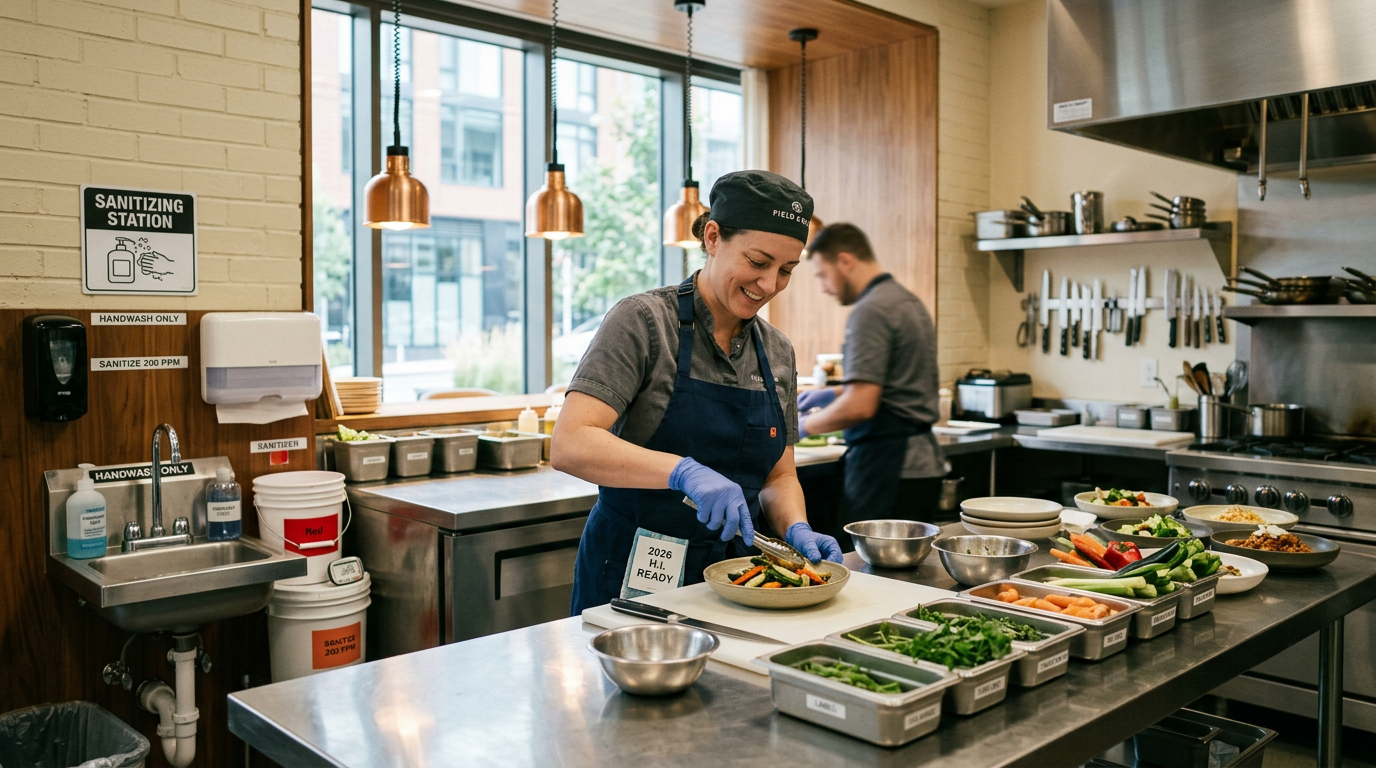

In the high-pressure environment of a commercial kitchen, food safety isn’t just a regulatory requirement—it’s the foundation of your restaurant’s reputation and success. The HACCP (Hazard Analysis and Critical Control Points) system represents the gold standard in food safety management, and for good reason. Understanding and implementing these seven principles protects your customers, your staff, and your business from the devastating consequences of foodborne illness.
The statistics are sobering: according to the CDC, approximately 1 in 6 Americans—roughly 48 million people—experiences a foodborne illness each year. However, restaurants that properly implement HACCP principles experience 60% fewer food safety incidents than those without systematic protocols. This isn’t just about compliance; it’s about creating a culture of safety that sets your establishment apart in an industry where reputation is everything.
Whether you’re opening a new restaurant, updating your existing safety protocols, or simply seeking to improve your knowledge, this comprehensive guide will walk you through each of the seven HACCP principles with practical examples, actionable insights, and real-world applications designed specifically for the restaurant industry.
From Food Safety to Kitchen Intelligence
AI Chef Pro adds AI-powered recipe management, food cost analysis, and menu engineering to complement your HACCP program. 55+ tools, free tier.

The 7 HACCP Principles — Your Complete Guide
The HACCP system was originally developed in the 1960s by NASA to ensure food safety for astronauts in space. Today, it forms the backbone of food safety regulations worldwide, including the FDA Food Safety Modernization Act (FSMA). Let’s examine each principle in detail.
Principle 1: Conduct Hazard Analysis
The first and perhaps most critical principle of HACCP requires you to identify and assess all potential hazards that could compromise food safety in your establishment. This comprehensive analysis forms the foundation upon which your entire HACCP plan is built.
Hazard analysis involves examining every step of your food production process—from receiving ingredients to serving customers—and identifying three categories of hazards:
- Biological Hazards: These include bacteria (Salmonella, E. coli, Listeria, Staphylococcus aureus), viruses (Norovirus, Hepatitis A), and parasites (Giardia, Cryptosporidium). Biological hazards represent the most common cause of foodborne illness and require the most vigilant monitoring. Bacteria can multiply rapidly in the “danger zone” between 41°F (5°C) and 135°F (57°C), making time and temperature control absolutely essential.
- Chemical Hazards: These encompass cleaning agents, sanitizers, pesticides, food additives, and naturally occurring toxins. Chemical hazards can enter the food supply through improper storage, cross-contamination, or inadequate rinsing after cleaning. Allergens—while not traditionally considered chemical hazards—are increasingly recognized as a critical category requiring separate management protocols.
- Physical Hazards: Foreign objects that can injure customers, including glass fragments, metal shavings, plastic pieces, bone fragments, hair, and jewelry. Physical hazards often result from equipment failure, improper handling, or packaging defects. These hazards can cause immediate customer injury and severe reputational damage.
To conduct an effective hazard analysis, assemble a cross-functional team including kitchen managers, line cooks, receiving personnel, and anyone else involved in food preparation. Walk through each production step systematically and document potential hazards at each stage. This collaborative approach ensures no hazard is overlooked and builds buy-in from your team.
Principle 2: Determine Critical Control Points (CCPs)
Once you’ve identified all potential hazards, the next step is determining where in your operation you can actually control them. A Critical Control Point (CCP) is a specific point, step, or procedure at which control can be applied to prevent or reduce a food safety hazard to an acceptable level.
Not every hazard requires a CCP—only those that are significant and can be effectively controlled at a specific point in your operation. To identify CCPs, many restaurants use a decision tree that guides you through questions like: “Is there a control measure at this step?” and “Could contamination occur at this point, or could it increase to unacceptable levels?”
Common Critical Control Points in restaurants include:
- Receiving: The point where ingredients enter your establishment. Temperature checks, visual inspection for spoilage, and verification of supplier certifications all occur here.
- Storage: Both dry storage and cold/ freezer storage require monitoring to ensure ingredients are stored at proper temperatures and rotated using FIFO (First In, First Out) methods.
- Cooking: The most critical CCP for destroying pathogenic bacteria. Proper cooking temperatures ensure food reaches internal temperatures that eliminate dangerous microorganisms.
- Cooling: Rapid cooling is essential to prevent bacterial growth. Foods must pass through the danger zone quickly to minimize the time they remain in the temperature range where bacteria multiply most rapidly.
- Reheating: Previously cooked foods must be reheated to safe temperatures within specific timeframes to prevent bacterial growth that may have occurred during cooling and storage.
- Hot Holding: Maintaining food at proper temperatures (above 135°F/57°C) during service to prevent bacterial growth.
- Cold Holding: Keeping cold foods below 41°F (5°C) to prevent bacterial proliferation.
- Serving: Final point of control where cross-contamination must be prevented through proper handling, gloves, and clean equipment.
Remember: fewer CCPs are better than more. Over-identifying CCPs can make your plan unwieldy and difficult to maintain. Focus on the points where control truly makes a difference in preventing significant hazards.
Principle 3: Establish Critical Limits
A Critical Limit is a specific, measurable value that must be met at each CCP to ensure food safety. These limits provide clear, objective criteria that your team can monitor and verify. Without clearly defined critical limits, your CCPs become meaningless—you need to know exactly what “safe” looks like.
Critical limits are typically based on regulatory standards, scientific guidelines, or manufacturer specifications. Here are the most critical temperature limits every restaurant must know:
| Food Item | Minimum Internal Temperature | Holding Requirement |
|---|---|---|
| Poultry (whole, ground, or restructured) | 165°F (74°C) | Hold above 135°F (57°C) |
| Ground meat (beef, pork, lamb) | 155°F (68°C) | Hold above 135°F (57°C) |
| Steaks, chops, roasts (whole cuts) | 145°F (63°C) | Hold above 135°F (57°C) |
| Fish (finfish) | 145°F (63°C) | Hold above 135°F (57°C) |
| Shellfish (shrimp, lobster, crab) | 145°F (63°C) | Hold above 135°F (57°C) |
| Eggs (for immediate service) | 145°F (63°C) | Hold above 135°F (57°C) |
| Eggs (custom-ordered, buffets) | 155°F (68°C) | Hold above 135°F (57°C) |
| Hot holding | N/A | Above 135°F (57°C) |
| Cold holding | N/A | Below 41°F (5°C) |
| Cooling (phase 1) | N/A | 135°F to 70°F in 2 hours |
| Cooling (phase 2) | N/A | 70°F to 41°F in 4 hours |
Beyond temperatures, critical limits may also include:
- pH levels: Some foods require specific acidity levels to prevent bacterial growth
- Time limits: Maximum time food can remain in the danger zone
- Chemical concentrations: Sanitizer levels must meet specific ppm (parts per million) requirements
- Moisture content: Certain dried foods require specific moisture levels for safety
Critical limits must be measurable—you cannot monitor what you cannot measure. This is why temperature, time, and chemical concentration are the most common types of critical limits in restaurant operations.
Principle 4: Establish Monitoring Procedures
Now that you’ve identified your CCPs and established critical limits, you need systematic procedures to monitor whether those limits are being met. Monitoring is the ongoing observation or measurement that determines whether each CCP is under control.
Effective monitoring procedures must answer four key questions:
- WHO: Who is responsible for monitoring? Designate specific individuals for each CCP. In busy kitchens, this should be a dedicated role, not an afterthought assigned to whoever happens to be available.
- WHAT: What are you measuring? Temperature, time, pH, sanitizer concentration—be specific about the parameter being monitored.
- WHEN: How often are you monitoring? Some CCPs require continuous monitoring (like hot holding), while others need periodic checks (like receiving temperatures).
- HOW: How are you measuring? What equipment is used? How is the data recorded?
There are two primary approaches to monitoring: manual and digital.
Manual Monitoring involves staff physically checking and recording temperatures or other measurements at designated intervals. This approach requires:
- Accurate, calibrated thermometers (dial, digital, or infrared)
- Standardized recording forms or logs
- Clear training on procedures and documentation requirements
- Supervisor review of logs to identify trends or issues
Digital Monitoring leverages technology to automate data collection and improve accuracy. Modern approaches include:
- IoT Temperature Sensors: Wireless sensors continuously monitor refrigerator, freezer, and holding unit temperatures, automatically logging readings and alerting staff to deviations.
- Smart Thermometers: Bluetooth-enabled thermometers that record temperatures directly to cloud-based systems.
- Automated Logging Systems: Software that timestamps and records all monitoring activities, creating audit-ready documentation automatically.
- Centralized Dashboards: Real-time visibility into all CCPs across multiple locations.
The advantages of digital monitoring are significant: reduced human error, 24/7 monitoring capability, instant alerts when critical limits are exceeded, and comprehensive documentation for audits. However, technology should support—not replace—trained staff who understand the principles behind the numbers.
Principle 5: Establish Corrective Actions
Despite best efforts, there will be times when monitoring reveals that a critical limit has been exceeded. This is where corrective actions come in. A corrective action is a predetermined procedure that is followed when monitoring indicates that a particular CCP is not under control.
Effective corrective actions must be:
- Predetermined: Developed in advance, not improvised when problems occur
- Specific: Clearly defined for each CCP and each type of deviation
- Documented: Recorded with details about what happened, what was done, and who was involved
- Designed to ensure safety: The primary goal is always to prevent unsafe food from reaching customers
Common corrective actions in restaurant settings include:
| Deviation | Corrective Action | Documentation Required |
|---|---|---|
| Food temperature below minimum when cooking | Continue cooking until proper temperature reached; verify with calibrated thermometer | Cooking log, temperature record, manager initials |
| Hot holding equipment malfunction | Transfer food to working equipment; discard if held below 135°F for more than 4 hours | Equipment repair ticket, food discard log, incident report |
| Cooling not completed within required time | Discard food; do not attempt to rapid-cool and save | Food discard log, reason for failure, supervisor notification |
| Refrigerator temperature exceeds 41°F | Check door seals, relocate product to backup unit, call for repair; discard TCS foods if above 41°F for more than 4 hours | Temperature log, repair ticket, product disposition |
| Expired product in storage | Remove and discard; investigate receiving procedures | Product discard log, root cause analysis, receiving procedure review |
| Sanitizer concentration too low/high | Adjust sanitizer solution to proper concentration; discard any items washed in incorrect solution | Sanitizer log, solution adjustment record |
Every corrective action should include these elements:
- Identify and correct the cause: Why did the deviation occur? Fix the underlying problem, not just the symptom.
- Determine product disposition: Is the affected food safe? Can it be salvaged through reprocessing, or must it be destroyed?
- Notify management: Who needs to know about the incident?
- Document everything: Create a written record of the deviation and your response.
- Review and update: Use the incident to improve your HACCP plan if needed.
Principle 6: Establish Verification Procedures
Having a HACCP plan on paper means nothing if it isn’t working effectively in practice. Verification procedures are the activities that confirm your HACCP system is functioning as intended. This principle ensures your plan is not just a document but a living, effective safety system.
Verification activities fall into several categories:
Calibration of Monitoring Equipment
Your thermometers and other monitoring devices must be accurate. Regular calibration against a known standard ensures your readings are reliable. Calibration should occur:
- Before first use
- After any drop or damage
- At regular intervals (weekly, monthly, or as manufacturer recommends)
-
6. Verification Procedures — Ensuring Your HACCP Plan Works
Verification activities confirm that your HACCP system functions as designed. These procedures answer a critical question: Is this plan actually preventing foodborne illness?
Verification includes several key activities:
- Validation: Initial proof that your plan effectively controls identified hazards
- HACCP system monitoring: Reviewing that CCPs are under control
- Corrective action verification: Confirming deviations were properly addressed
- Periodic reassessment: Evaluating whether the plan remains adequate
Calibration Frequency Guidelines
Equipment calibration ensures measurement accuracy. Follow these recommended frequencies:
- Thermometers: Daily before use, against a reference thermometer
- Refrigeration monitors: Weekly calibration check
- pH meters: Before each use, with at least two calibration points
- Scales: Monthly precision verification
- Metal detectors: Daily test with all product sizes
- Timer devices: Annual professional calibration
Document all calibration results. A thermometer showing a 2°F variance might seem minor—but that small error could allow pathogenic growth.
7. Record-Keeping — Documentation That Protects Your Business
The final principle creates an evidence trail demonstrating your commitment to food safety. Records transform your HACCP plan from theory into measurable, accountable practice.
Essential Records to Maintain
Temperature Logs are your most critical documentation. Record temperatures at defined intervals for all refrigerated units, hot holding equipment, and cooking processes. Include time, temperature, and employee initials.
Corrective Action Reports document every deviation from critical limits and how it was resolved. Detail the problem, immediate action taken, root cause analysis, and preventive measures implemented.
Training Certifications verify that staff understand their roles in HACCP implementation. Maintain records of course completion, certification numbers, and renewal dates.
Equipment Maintenance Logs track calibration, repairs, and preventive maintenance. This documentation proves your equipment functions reliably.
Supplier Documentation includes certificates of analysis, safety certifications, and traceability records. Your HACCP plan is only as strong as your ingredient supply chain.
HACCP Plan Reviews document annual reassessments, plan modifications, and approval signatures from your HACCP team.
Record Retention Requirements
Retention periods vary by jurisdiction and record type. Generally:
- Temperature logs: 1-2 years
- Training records: 3 years post-employment
- Corrective action reports: 2-3 years
- Equipment maintenance: Duration of equipment ownership plus 2 years
- HACCP plan documentation: Permanent, with all revisions retained
Digital vs. Paper Records
Digital systems offer significant advantages: automatic timestamps, searchability, backup capabilities, and easier auditing. Cloud-based platforms enable real-time monitoring and instant access during inspections.
However, digital systems require consistent internet connectivity, data security measures, and staff training. Many restaurants benefit from hybrid approaches—digital for daily monitoring, paper as backup during technical failures.
HACCP Keeps Food Safe — AI Keeps Operations Smart
Pair food safety excellence with AI-powered kitchen optimization. Recipe scaling, demand forecasting, cost analysis — all in one platform.
Common HACCP Mistakes in Restaurants
Even well-intentioned establishments frequently stumble on HACCP implementation. Recognizing these pitfalls helps you avoid them:
Incomplete Hazard Analysis
Many restaurants conduct surface-level hazard identification without thoroughly analyzing each recipe and process. A proper hazard analysis examines biological, chemical, and physical risks for every menu item—from receiving through service.
Monitoring Only During Slow Periods
Some establishments only monitor CCPs when business is quiet, creating a false sense of compliance. Hazards don’t take weekends off. Your monitoring must reflect actual operational realities.
Poor Corrective Action Follow-Through
Documenting a deviation without implementing lasting corrective action defeats HACCP’s purpose. Each corrective action should trigger a root cause analysis preventing recurrence.
Outdated Plans Never Reviewed
Menu changes, new equipment, or staffing shifts require HACCP plan updates. An annual review is mandatory—but plans should be updated whenever significant operational changes occur.
Staff Not Trained on Their Specific CCPs
General food safety training isn’t enough. Employees responsible for monitoring specific CCPs need detailed training on those exact procedures, critical limits, and corrective actions.
Assuming Suppliers Handle Everything
Restaurant HACCP plans must include supplier verification procedures. You cannot outsource food safety accountability to vendors. Document your supplier approval process and ongoing verification activities.
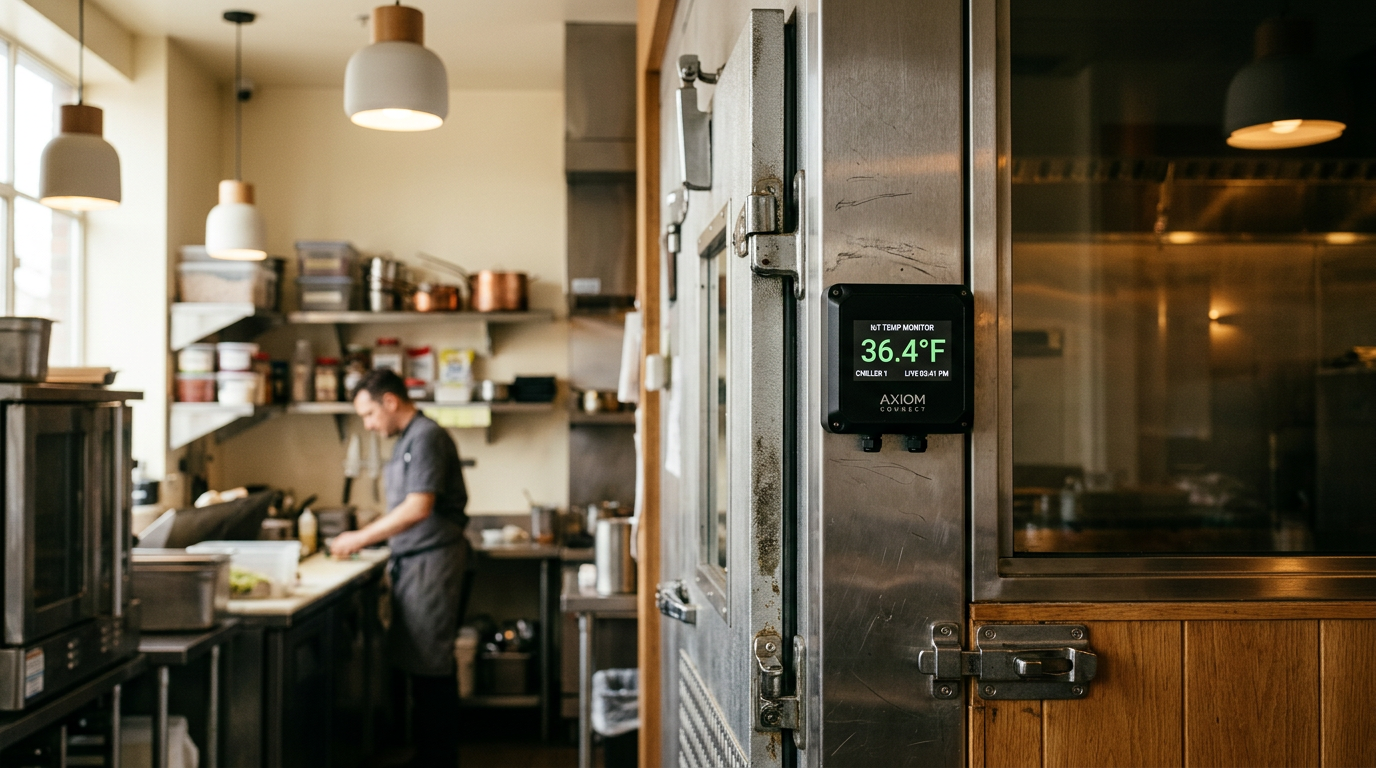
IoT sensors provide continuous temperature monitoring — replacing manual checks with automated, documented surveillance. Technology and HACCP Compliance
Modern technology transforms HACCP from a paper-heavy burden into an efficient, real-time food safety system. Restaurants leveraging these tools dramatically reduce human error while improving audit readiness.
IoT Temperature Sensors
Internet-connected temperature monitors provide continuous vigilance. These devices send real-time alerts when temperatures approach critical limits—before food safety is compromised. Some systems automatically log temperatures, eliminating manual recording errors.
Digital Checklists and Mobile Monitoring
Smartphone and tablet applications guide staff through monitoring procedures step-by-step. Digital checklists reduce missed items, automatically timestamp entries, and flag overdue tasks.
Automated Alerts and Escalation
When temperature excursions occur, automated systems notify designated staff immediately. Escalation protocols ensure problems reach someone who can act, even outside business hours.
Cloud-Based Record Keeping
Cloud platforms centralize all HACCP documentation, making it accessible from any location. During health inspections, inspectors can review comprehensive records instantly—no more scrambling for paper logs.
AI-Powered Predictive Monitoring
Artificial intelligence analyzes historical data to predict potential failures before they occur. Machine learning models identify patterns—such as refrigeration units showing early degradation—enabling preventive maintenance.
AI Chef Pro: Your Complete Kitchen Operations Suite
Implementing HACCP effectively requires more than just temperature monitoring. AI Chef Pro provides over 55 AI-powered tools designed specifically for kitchen operations, including:
- Demand forecasting: Predict prep needs accurately, reducing waste and ensuring ingredient freshness
- Recipe management: Standardize recipes with built-in HACCP checkpoints and portion controls
- Inventory tracking: Monitor ingredient shelf life and rotation automatically
- Staff scheduling: Ensure adequate trained coverage during all shifts
- Supplier management: Track vendor compliance and documentation
The platform integrates seamlessly with your existing temperature monitoring systems while providing comprehensive tools for every aspect of food safety management.
Try AI Chef Pro free: The free tier includes 10 uses monthly—perfect for evaluating how AI-powered tools can streamline your HACCP compliance. Visit aichef.pro to get started today.
Frequently Asked Questions
Elevate Your Kitchen Standards
HACCP principles + AI intelligence = the modern kitchen advantage. Start free with AI Chef Pro.
What are the 7 principles of HACCP?
The seven HACCP principles are: (1) Conduct hazard analysis, (2) Identify critical control points (CCPs), (3) Establish critical limits, (4) Establish monitoring procedures, (5) Establish corrective actions, (6) Establish verification procedures, and (7) Establish record-keeping and documentation. These principles create a systematic approach to identifying and controlling food safety hazards.
Is HACCP mandatory for restaurants?
HACCP is mandatory for certain food operations including seafood, juice, meat, and poultry processing under federal regulations. However, most states require or strongly recommend HACCP implementation for restaurants. Even where not explicitly mandated, health departments expect HACCP-based food safety programs, and following these principles significantly improves inspection outcomes.
How long does it take to implement HACCP?
Implementation timelines vary based on restaurant size and complexity. A small restaurant with a straightforward menu typically needs 2-4 weeks for initial implementation. Multi-unit operations or complex menus may require 1-3 months. Ongoing maintenance and staff training continue indefinitely. The investment pays dividends through improved safety and smoother inspections.
What is the difference between HACCP and food safety?
Food safety is the broader goal—ensuring food won’t cause illness or injury. HACCP is a specific systematic preventive approach to achieving that goal. Think of food safety as the destination and HACCP as one proven method of transportation. HACCP provides structure, documentation, and accountability that general food safety practices often lack.
Who needs to be trained in HACCP?
All food handlers need basic HACCP awareness—they should understand why procedures matter. Managers require certified HACCP training covering plan development and implementation. Your HACCP team needs comprehensive understanding of all seven principles, hazard analysis methodology, and regulatory requirements. Training should be role-specific and include hands-on practice with actual monitoring procedures.
How much does HACCP certification cost?
Costs vary significantly. Manager certification courses typically cost $200-500, with online options often more affordable. Full facility HACCP certification and third-party audits range from $1,000 to $5,000 or more depending on operation size and complexity. Additional costs include initial implementation time, potential equipment upgrades, and ongoing maintenance. Many restaurants find certification pays for itself through reduced insurance premiums and fewer inspection violations.
Conclusion: HACCP as Your Competitive Advantage
The seven HACCP principles provide a proven framework protecting your customers, your reputation, and your bottom line. Implementing these procedures isn’t merely regulatory compliance—it’s a commitment to excellence that distinguishes your establishment.
Start with a thorough hazard analysis of your menu. Identify where mistakes could cause harm, establish clear limits, train your team on their specific responsibilities, and document everything. The initial investment in time and resources pays dividends through smoother operations, confident staff, and inspectors who recognize your professionalism.
Technology amplifies your efforts. Modern tools transform HACCP from paperwork into real-time protection. Temperature sensors that never sleep. Automated alerts that reach the right person immediately. Records that assemble themselves for any inspection.
AI Chef Pro supports your HACCP journey with over 55 tools designed specifically for kitchen operations. From demand forecasting that ensures ingredient freshness to recipe management with built-in safety checkpoints, our platform streamlines every aspect of food safety while improving overall kitchen efficiency.
Your customers trust you with their health. Your staff depends on you for clear procedures. Your business future hinges on consistent, documented excellence.
Ready to strengthen your HACCP program? Get started with AI Chef Pro’s free tier—10 uses monthly to explore how AI-powered tools can transform your food safety operations.
Visit AI Chef Pro today and discover why leading restaurants trust our platform for HACCP compliance and kitchen excellence.
Related Reading
- Restaurant Technology 2026: The Definitive Guide
- Smart Kitchen Technology for Commercial Kitchens
- Restaurant Food Waste: 12 AI Strategies
- Kitchen Display Systems (KDS) Guide
- Best Recipe Costing Software 2026
- AI Cooking Assistant for Professional Chefs
- HACCP Plan Template: Step-by-Step Guide
Discover more from AI Chef Pro Blog
Subscribe to get the latest posts sent to your email.