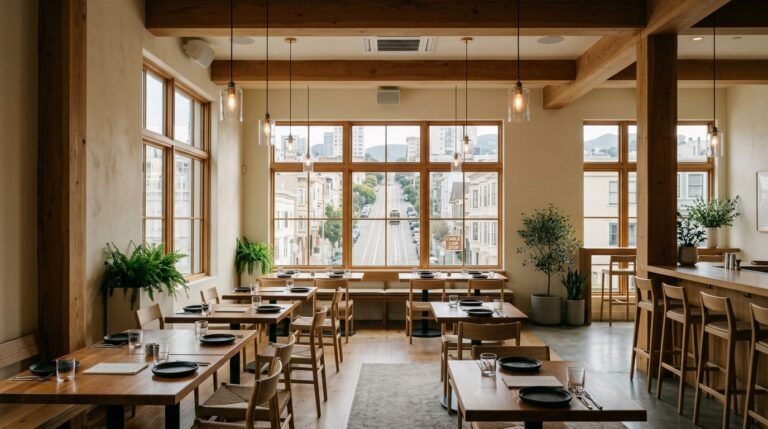
The restaurant industry is undergoing a technological transformation at an unprecedented pace. Restaurant technology spending is accelerating across all segments, with 73% of operators now investing in AI and smart technology according to the National Restaurant Association’s 2026 industry report. The average modern restaurant now operates using five to eight different technology platforms simultaneously, creating both opportunities and challenges for operators seeking to streamline their operations.
However, this proliferation of restaurant management technology has come with a significant drawback: fragmented tech stacks create data silos, integration headaches, and operational inefficiencies that can erode profit margins. Many operators find themselves juggling disconnected systems that don’t communicate with each other, leading to manual data entry, inventory discrepancies, and missed insights that could drive better business decisions.
This comprehensive guide maps the complete modern restaurant tech stack for 2026, helping you understand which technologies deliver the highest ROI, how to integrate them effectively, and which solutions—like AI Chef Pro—are leading the charge in artificial intelligence adoption for the foodservice industry.
Add AI Intelligence to Your Restaurant Tech Stack
AI Chef Pro provides 55+ AI tools for menu engineering, food cost analysis, demand forecasting, and recipe management. Start free — 10 uses/month.
The Modern Restaurant Tech Stack — Complete Overview
A modern restaurant technology stack consists of five interconnected layers, each serving distinct operational functions while sharing data to create a unified ecosystem. Understanding these layers is essential for building an efficient, scalable operation.
Front-of-House Technology
The front-of-house layer encompasses all customer-facing technology that facilitates ordering, payment, and guest experience management. This includes restaurant POS systems that serve as the transactional hub, self-ordering kiosks that reduce labor costs and increase order accuracy, QR code ordering capabilities for contactless transactions, payment processing solutions that handle multiple payment methods, and reservation and waitlist management systems that optimize table turnover.
Leading operators are increasingly integrating these front-of-house components to create seamless guest experiences while capturing valuable data about customer preferences, ordering patterns, and spending behaviors.
Back-of-House Technology
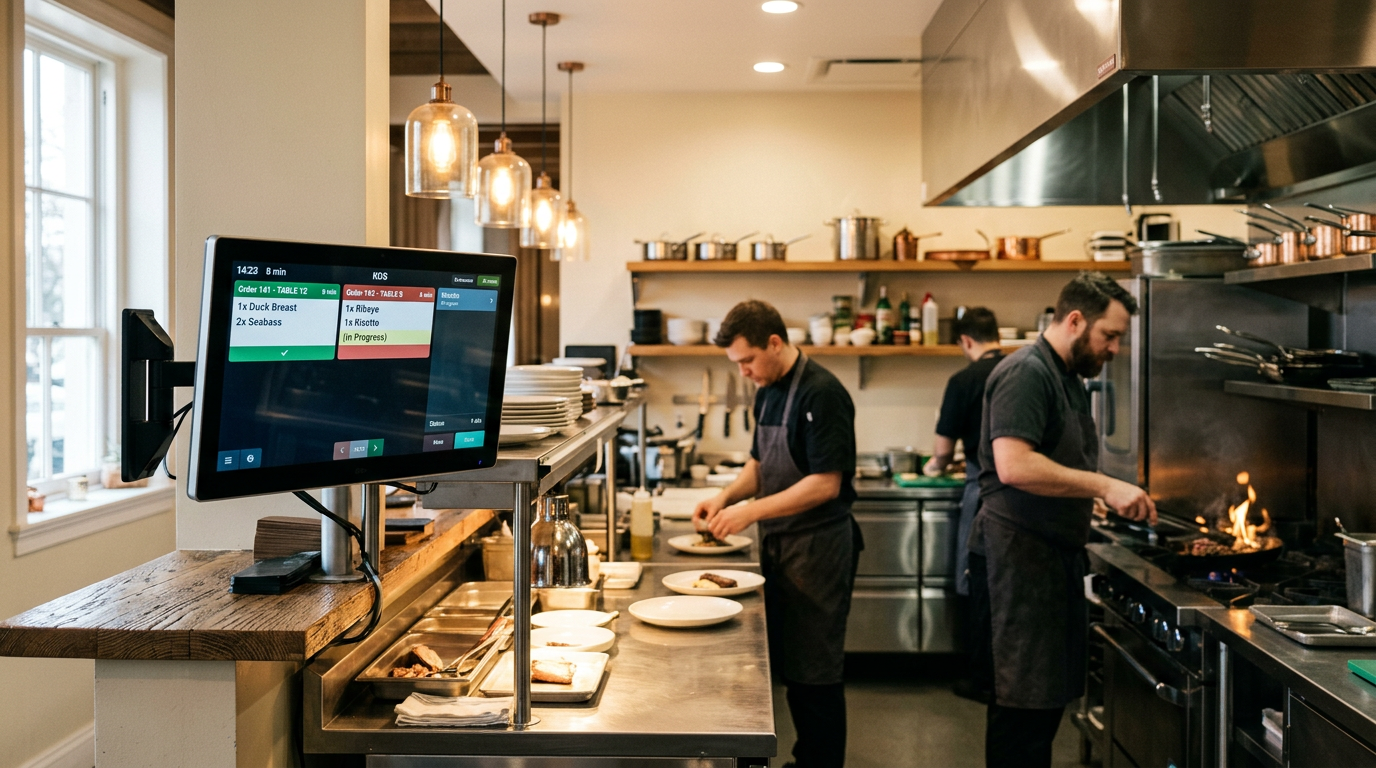
The back-of-house layer handles the critical operational functions that happen in the kitchen and supply chain. Kitchen Display Systems (KDS) replace traditional paper tickets with digital order routing, while inventory management solutions provide real-time visibility into stock levels. Recipe costing tools help maintain food cost percentages, and demand forecasting applications predict prep needs based on historical data and upcoming events. Prep management systems ensure kitchen staff can plan production efficiently during peak periods.
Operations Technology
Operations technology covers the administrative and workforce management functions that keep restaurants running smoothly. Staff scheduling software optimizes labor allocation based on forecasted demand, while payroll integration ensures accurate compensation. Accounting integration connects restaurant financials with broader business systems, and compliance tools help maintain HACCP standards and other regulatory requirements that protect both customers and businesses.
Customer Relationship Technology
The customer layer focuses on building lasting relationships with guests through technology. CRM systems capture guest data and preferences, while loyalty programs incentivize repeat visits. Marketing automation enables personalized campaigns based on customer behavior, and online ordering platforms capture off-premise revenue. Delivery integration connects restaurants with third-party delivery services and manages the complex logistics of getting food to customers.
Intelligence and Analytics Technology
The intelligence layer represents the fastest-growing segment of restaurant technology, leveraging AI and machine learning to extract actionable insights from the data generated by other systems. AI analytics platforms process operational data to identify patterns and opportunities, while menu engineering tools optimize item selection and pricing based on profitability and popularity. Food cost tracking monitors ingredient expenses in real-time, and waste monitoring systems identify opportunities to reduce spoilage and overproduction.
For operators seeking to implement this intelligence layer, AI Chef Pro (aichef.pro/en) offers a comprehensive suite of more than 55 AI-powered tools designed specifically for foodservice professionals. With a free tier available, restaurants of all sizes can access advanced analytics, menu engineering, demand forecasting, and other AI capabilities without significant upfront investment.
Point of Sale (POS) Systems — The Hub of Everything
The restaurant POS system remains the central hub of any modern restaurant technology stack. It processes every transaction, tracks sales data, manages inventory deductions, and integrates with virtually every other system in the operation. Choosing the right POS system is perhaps the most critical technology decision a restaurant operator will make.
Leading POS Systems Compared
| POS System | Best For | Key Features | Pricing Range |
|---|---|---|---|
| Toast | Full-service restaurants | Robust reporting, CRM integration, menu management, team management | $0 base + $69/terminal/month |
| Square for Restaurants | Small to mid-size, fast casual | Simple interface, strong integrations, free processing hardware | $0 base + 2.6% + $0.10/transaction |
| Clover | Quick service, small restaurants | Customizable apps, compact hardware, offline mode | $0-$299 base + $14.95-$49.95/month |
| Lightspeed | Complex menus, retail integration | Advanced inventory, multi-location, detailed analytics | $99-$229/month location |
| SpotOn | Mid-market, sports bars | Competitive pricing, marketing tools, loyalty program | $60-$75/month |
When evaluating restaurant POS systems, operators should prioritize cloud-based solutions that enable remote management and real-time reporting. Integration capabilities are equally important—the best POS systems connect seamlessly with inventory management, accounting software, delivery platforms, and analytics tools. Mobile ordering capabilities have become essential, particularly for restaurants seeking to capture off-premise demand.
Reporting features vary significantly across platforms. Advanced POS systems now offer AI-powered insights that identify trends, predict demand, and suggest menu changes based on sales data. These capabilities position the POS as not just a transaction processor but as a strategic tool for restaurant growth.
Kitchen Display Systems (KDS) — Replacing Paper Tickets
Kitchen Display Systems have evolved from nice-to-have upgrades to essential components of modern restaurant operations. By replacing paper tickets with digital displays, KDS solutions reduce errors, improve ticket timing, and provide unprecedented visibility into kitchen performance.
The benefits of implementing a KDS extend far beyond eliminating handwritten tickets. Real-time order routing automatically sends tickets to the appropriate stations based on menu item categories, ensuring prep staff focus on the right dishes at the right time. Station management features allow kitchen managers to balance workload across stations, while timing analytics identify bottlenecks and opportunities for workflow improvements.
Leading KDS Solutions
- FreshKDS — Cloud-based KDS known for flexibility and strong integration with multiple POS systems
- QSR Automations — Enterprise-focused solution with advanced analytics and multi-unit capabilities
- Toast KDS — Native KDS solution designed specifically for Toast POS users
- Orderbird KDS — European market leader expanding into US with tablet-based deployment
Modern KDS systems integrate directly with restaurant POS systems, automatically receiving orders as they’re placed—whether from front-of-house staff, self-service kiosks, or online ordering channels. This eliminates the manual order entry that previously created errors and delays. Kitchen staff can view order details, modifications, and timing requirements on screen, while managers receive alerts when tickets exceed expected preparation times.
The data generated by KDS systems is invaluable for continuous improvement. Operators can analyze average ticket times by station, identify consistently slow-moving items, and make data-driven decisions about menu changes or staffing adjustments. For restaurants seeking to improve customer satisfaction through consistent, timely food delivery, a KDS is no longer optional—it’s essential.
AI and Machine Learning — The Fastest Growing Segment
Artificial intelligence represents the most significant technological advancement in the restaurant industry for 2026. Restaurant automation through AI is transforming operations across all segments, from demand forecasting to menu engineering, delivering measurable improvements in efficiency and profitability.
Demand forecasting powered by machine learning can reduce food waste by up to 40% by predicting exactly how much of each menu item will be needed on any given day. These systems analyze historical sales data, weather patterns, local events, seasonality, and even social media trends to generate highly accurate demand predictions. The financial impact is substantial—reducing waste directly improves food cost percentages and increases profit margins.
Dynamic pricing is another AI application gaining traction in the restaurant industry. Similar to surge pricing in rideshare apps, dynamic pricing adjusts menu prices based on real-time demand, time of day, and other factors. While controversial with some consumers when applied too aggressively, subtle price optimization can significantly increase revenue without negatively impacting guest perception.
Automated scheduling leverages AI to optimize labor allocation, typically delivering 25% labor cost savings compared to traditional scheduling approaches. These systems analyze historical sales data, weather forecasts, upcoming events, and employee availability to create optimal schedules that match labor supply with anticipated demand.
Menu engineering AI tools analyze the profitability and popularity of each menu item, categorizing dishes into strategic quadrants and recommending changes that maximize revenue. These tools consider food costs, prep complexity, ingredient overlap, and customer preferences to suggest menu optimizations that improve both margins and guest satisfaction.
Chatbots and voice ordering have achieved 97% accuracy in handling routine customer inquiries and orders. Restaurants are increasingly deploying AI-powered assistants on their websites and through voice platforms like Alexa and Google Home to handle reservations, answer questions, and process takeout orders without human intervention.
The pace of AI adoption in restaurants is accelerating rapidly. Operators who delay implementing these technologies risk falling behind competitors who are already leveraging AI to reduce costs, improve service, and drive growth. The intelligence layer of your restaurant tech stack should include AI capabilities—and AI Chef Pro (aichef.pro/en) offers the most comprehensive suite of AI tools specifically designed for the foodservice industry, with over 55 tools covering demand forecasting, menu engineering, cost tracking, and more.
Inventory and Supply Chain Technology
Effective inventory management is the foundation of restaurant profitability. Food costs typically represent 25-35% of revenue, making inventory control a critical factor in overall financial performance. Modern inventory technology provides real-time tracking, automated ordering, and sophisticated supplier management capabilities.
Real-time inventory tracking eliminates the traditional weekly or monthly inventory counts that leave restaurants vulnerable to shrinkage and waste. Connected directly to POS systems, these platforms automatically deduct inventory as items are sold, providing constant visibility into stock levels. When combined with demand forecasting, restaurants can maintain optimal inventory levels that minimize both stockouts and excess inventory.
Automated ordering takes this further by generating purchase orders when stock falls below predetermined thresholds. These systems consider lead times, minimum order quantities, and current stock levels to create orders that arrive just in time for anticipated needs. The automation eliminates the manual reorder processes that often lead to over-ordering or forgotten items.
Supplier management platforms centralize communication with vendors, track pricing trends, and compare supplier performance. Operators can manage all supplier relationships from a single dashboard, streamline invoice reconciliation, and negotiate better terms based on consolidated purchasing data.
Leading Inventory Management Solutions
- MarketMan — Comprehensive inventory and ordering platform with strong supplier integration
- BlueCart — B2B ordering platform simplifying procurement for restaurants
- WISK — Bar-specific inventory management with automated par levels
- BlueCart — Combines inventory tracking with marketplace purchasing
Integration between inventory management and POS systems is essential for accurate food costing. When these systems are connected, restaurants can track actual food costs in real-time, identify variance from theoretical costs, and take immediate action when costs exceed targets. This integration is a cornerstone of effective restaurant management technology.
Your Tech Stack Is Missing the AI Layer
73% of restaurant operators are investing in AI. Don’t fall behind — AI Chef Pro integrates with your existing stack to add intelligence to every decision.
Self-Service and Ordering Technology
Consumer preferences for restaurant technology have shifted dramatically toward self-service options. Research indicates that 61% of diners want more self-service technology options in restaurants, driving rapid adoption of kiosks, mobile ordering, and contactless payment solutions.
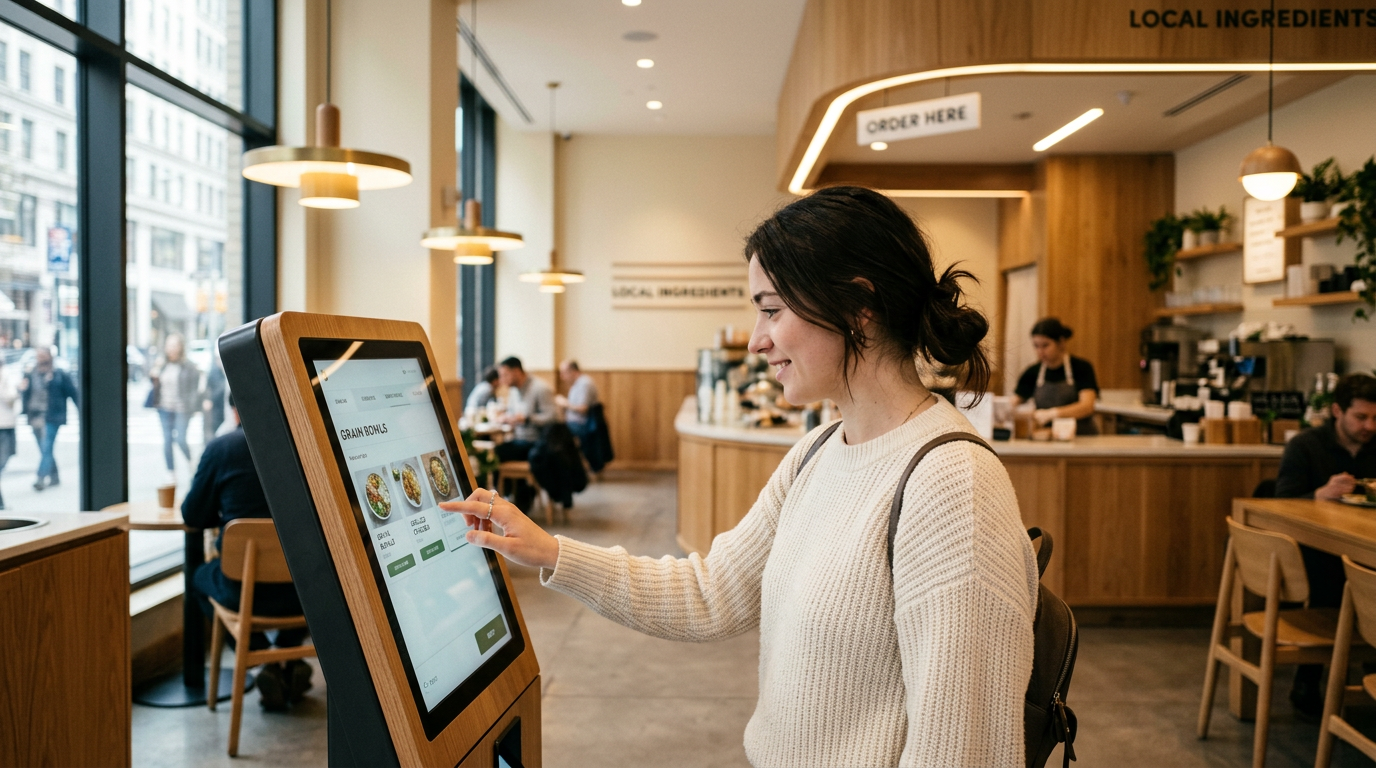
Self-ordering kiosks have become standard in quick-service and fast-casual restaurants, but are increasingly appearing in full-service establishments as well. These touch-screen terminals allow customers to browse menus, customize orders, and pay without interacting with staff. The benefits extend beyond labor reduction—kiosks typically generate 15-30% higher average tickets compared to counter service, as customers take time to explore options and add modifications without feeling rushed.
QR code ordering exploded during the pandemic and has remained popular for its convenience and safety. Tableside QR codes connect customers to digital menus and ordering platforms via their smartphones, eliminating physical menus and enabling contactless payment. For restaurants, QR ordering reduces printing costs and enables dynamic menu updates without reprinting.
Mobile ordering apps and restaurant-branded apps capture customer data and enable loyalty program participation. While third-party delivery apps like DoorDash and Uber Eats dominate the market, restaurants with their own ordering apps retain higher margins and better customer relationships. The best approach combines multiple channels—third-party delivery for reach, first-party apps for margin and data.
Tableside tablets are gaining traction in full-service restaurants, allowing guests to view detailed menu information, customize orders, request checks, and pay without waiting for a server. These devices enhance the guest experience while improving table turnover and reducing server workload.
The labor savings from self-service technology are significant, but operators should consider the impact on customer experience. The most successful implementations balance automation with human interaction, using technology to enhance rather than replace personal service. For many restaurants, the optimal approach combines self-service options for routine transactions while maintaining attentive service for guests seeking a more traditional experience.
How to Build Your Restaurant Tech Stack
Building the right restaurant tech stack requires matching technology investments to your specific concept, size, and operational needs. The following framework provides guidance for different restaurant types.
QSR and Fast Casual Restaurants
Quick-service and fast-casual restaurants benefit from a focused tech stack emphasizing speed, accuracy, and throughput:
- POS System — Cloud-based POS optimized for quick transactions (Toast, Square for Restaurants)
- KDS — Digital kitchen display for order accuracy and timing
- Kiosks — Self-ordering kiosks to reduce labor and increase ticket sizes
- Delivery Integration — Connections to DoorDash, Uber Eats, Grubhub
- Inventory Management — Real-time tracking with automated ordering
- AI Intelligence — Demand forecasting and menu optimization via AI Chef Pro
Full-Service Restaurants
Full-service restaurants require a different emphasis, focusing on guest experience and table management:
- POS System — Feature-rich POS with table mapping and server management (Toast, Lightspeed)
- Reservations — OpenTable, Resy, or Toast Reservations
- KDS — Kitchen display for kitchen timing and accuracy
- CRM — Guest relationship management and preference tracking
- Staff Scheduling — Labor scheduling optimized for variable demand
- AI Intelligence — Menu engineering and customer analytics via AI Chef Pro
ghost kitchens
Virtual brands and ghost kitchens operate with minimal front-of-house, maximizing delivery efficiency:
- Virtual POS — Multi-brand capable POS system
- Delivery Platforms — Integration with all major delivery aggregators
- KDS — Digital kitchen display with multi-station support
- Inventory AI — Automated inventory and demand forecasting
- AI Intelligence — Comprehensive AI tools for ghost kitchen operations via AI Chef Pro
Multi-Unit Operations
Restaurant groups and chains require centralized control and standardization:
- Enterprise POS — Multi-location capable system with centralized management
- Centralized Reporting — Real-time visibility across all locations
- AI Analytics — Enterprise-grade analytics and benchmarking via AI Chef Pro
- Standardized Recipes — Centralized recipe management ensuring consistency
- Supply Chain Integration — Consolidated purchasing and supplier management
Regardless of restaurant type, the intelligence layer has become essential for competitive operations. AI Chef Pro (aichef.pro/en) provides over 55 AI-powered tools that fit seamlessly into any restaurant tech stack, offering a free tier that makes advanced AI accessible to restaurants of all sizes.
Frequently Asked Questions
Build a Smarter Restaurant with AI
From food cost tracking to demand forecasting — AI Chef Pro connects your kitchen data to actionable insights. Free tier available.
What technology does a restaurant need?
Every restaurant needs core technology including a POS system to process transactions, a KDS (Kitchen Display System) to manage kitchen orders, and inventory management to track supplies and control food costs. Advanced technology like AI analytics, self-ordering kiosks, CRM systems, and marketing automation can significantly enhance operations but become increasingly important as restaurants scale. The specific technology mix depends on your restaurant type, size, and growth objectives.
How much should a restaurant spend on technology?
Industry benchmarks suggest restaurants should allocate 3-5% of revenue to technology. For a small restaurant, this translates to approximately $5,000-$15,000 annually on core technology. Mid-size restaurants typically spend $15,000-$50,000 per year on technology, while larger operations may invest significantly more. The ROI typically includes labor savings, reduced waste, increased revenue from better data, and improved customer satisfaction. Many technology providers offer subscription models that spread costs across monthly payments rather than large upfront investments.
What is the best POS system for restaurants in 2026?
The best POS system depends on your specific restaurant concept and needs. Toast is ideal for full-service restaurants that need robust reporting and CRM features. Square for Restaurants works well for small to mid-size operations seeking simplicity and strong value. Clover suits quick-service restaurants needing customizable features, while Lightspeed excels for complex menus and multi-location operations. SpotOn offers competitive pricing for mid-market establishments. The most important factors are cloud-based architecture, integration capabilities, and alignment with your operational requirements.
How is AI being used in restaurants?
AI applications in restaurants span virtually every operational area. Demand forecasting uses machine learning to predict sales, reducing waste by up to 40%. Dynamic pricing adjusts menu prices based on real-time demand. Automated scheduling optimizes labor allocation, typically saving 25% on labor costs. Menu engineering AI analyzes profitability and popularity to recommend optimal menu design. Chatbots and voice ordering handle customer inquiries with 97% accuracy. Additional applications include predictive maintenance for equipment, personalized marketing based on customer behavior, and quality control through computer vision. AI Chef Pro offers over 55 AI tools specifically designed for restaurant operations.
What is a KDS and why do restaurants need one?
A KDS (Kitchen Display System) is a digital screen that displays orders to kitchen staff, replacing traditional paper tickets. Restaurants need KDS solutions because they dramatically reduce order errors, improve ticket timing, and provide valuable operational data. KDS systems automatically route orders to appropriate stations, display modifications clearly, and track preparation times. The data generated helps identify slow-moving items, optimize staffing, and improve overall kitchen efficiency. For restaurants seeking to deliver consistent, high-quality food quickly, a KDS has become an essential investment.
How do I integrate multiple restaurant technologies?
Integrating restaurant technology starts with choosing platforms that offer open APIs and pre-built integrations. Your POS system should serve as the central hub, with other systems (inventory, KDS, accounting, delivery) connecting back to it. Look for POS providers with robust integration marketplaces. If direct integration isn’t available, middleware solutions can connect disparate systems. Prioritize data flow from POS to inventory (for automatic deductions) and from inventory to accounting (for cost tracking). Test integrations thoroughly before going live, and establish clear data governance policies. Many modern restaurant tech stacks use cloud-based systems that communicate automatically, minimizing manual data entry and ensuring real-time data accuracy.
Conclusion
The restaurant technology landscape in 2026 offers unprecedented opportunities for operators willing to invest in modern, integrated solutions. From cloud-based POS systems that serve as operational hubs to AI-powered analytics that drive strategic decisions, the technologies available today can transform restaurant operations in ways that were unimaginable just a few years ago.
Building an effective restaurant tech stack requires careful planning and strategic decision-making. Start with the core technologies—POS, KDS, and inventory management—then layer in customer-facing solutions and intelligence capabilities as your operation matures. The key is integration: choose platforms that communicate with each other to eliminate data silos and create a unified view of your operation.
For the intelligence layer specifically, AI Chef Pro (aichef.pro/en) stands out as the most comprehensive solution for restaurants seeking to leverage artificial intelligence. With over 55 AI-powered tools covering demand forecasting, menu engineering, cost tracking, waste reduction, and more, AI Chef Pro provides the advanced capabilities that modern restaurants need to stay competitive. Their free tier makes it accessible for restaurants of all sizes to begin benefiting from AI technology without significant investment.
The restaurant industry is moving faster than ever toward technology-driven operations. Operators who embrace this transformation—implementing integrated tech stacks, leveraging AI for insights and automation, and continuously optimizing their technology investments—will be best positioned for success in 2026 and beyond.
Related Reading
- Smart Kitchen Technology for Commercial Kitchens: The Complete Guide
- Ghost Kitchen Technology Stack: Essential Tools for 2026
- Best Recipe Costing Software 2026: 10 Tools Compared
- AI Cooking Assistant for Professional Chefs
- Restaurant Food Waste: 12 AI Strategies to Cut Waste by 30%
- AI Menu Pricing Strategy: Data-Driven Pricing for Restaurants
Discover more from AI Chef Pro Blog
Subscribe to get the latest posts sent to your email.