
Acquiring a new customer costs 5-7x more than retaining an existing one. A 5% increase in retention can boost profits 25-95%. Yet most restaurants focus almost entirely on acquisition. This guide covers proven customer retention strategies restaurant owners can implement immediately to transform one-time visitors into lifelong advocates.
Keep Guests Coming Back with Consistent Quality
AI Chef Pro ensures recipe consistency, optimizes menus, and helps you build dishes worth returning for. 55+ AI tools, free tier.
Why Customer Retention Matters More Than Acquisition
The hospitality industry operates on relationships. Every restaurant owner understands the rush of a full dining room, but the true measure of success lies in what happens after the guests leave. Understanding the economics behind customer retention reveals why shifting focus from acquisition to retention represents one of the most impactful business decisions you can make.
The True Cost of Customer Acquisition
When a new customer walks through your doors, the investment required to get them there extends far beyond marketing spend. Consider the hidden costs: advertising budgets, promotional discounts, staff time spent on onboarding, and the learning curve as your team adapts to serve unfamiliar preferences. Research consistently shows that acquiring a new customer costs 5-7 times more than retaining an existing one.
For a mid-sized restaurant spending $2,000 monthly on marketing to attract 100 new customers, the cost per acquisition sits around $20. Meanwhile, your existing customers continue generating revenue with minimal additional investment. This arithmetic becomes even more compelling when you examine lifetime value.
Understanding Customer Lifetime Value
Customer lifetime value (CLV) represents the total revenue a customer generates throughout their relationship with your restaurant. For restaurants with strong retention practices, this number tells a powerful story. A guest who visits once monthly, spending an average of $45 per visit, generates $540 annually. Over five years, that single customer contributes $2,700 to your bottom line—without accounting for inflation or increased spending as loyalty deepens.
The mathematics become compelling when you factor in that repeat customers spend 67% more than new customers. These returning guests tend to order more confidently, try higher-margin items, and bring companions who may become customers themselves. They’re also less price-sensitive because they value the relationship you’ve built.
The Word-of-Mouth Multiplier Effect
Retained customers don’t just spend more—they become ambassadors for your brand. Studies indicate that satisfied repeat customers refer an average of 3-5 new customers through word-of-mouth recommendations. This organic acquisition comes at no cost and carries credibility that advertising cannot match.
Consider the compound effect: 100 loyal customers, each referring just two new customers annually, potentially generates 200 additional visits without spending a dime on marketing. The multiplier continues as those referred customers become retained customers, creating a self-sustaining growth engine that acquisition-focused competitors simply cannot replicate.
| Metric | New Customer | Retained Customer |
|---|---|---|
| Average Check Size | $35 | $58 |
| Marketing Cost per Visit | $12-20 | $2-4 |
| Referral Rate | 0.3 per year | 3-5 per year |
| Annual Revenue Potential | $280 | $696+ |
10 Customer Retention Strategies
Now that you understand why retention deserves priority, let’s examine the specific strategies that transform occasional visitors into devoted regulars. Each approach addresses different aspects of the customer experience while building the emotional connection that drives loyalty.
1. Loyalty Programs
A well-designed loyalty program creates tangible incentives for repeat visits while gathering valuable data about customer preferences. The key lies in making rewards achievable and desirable—too complicated or distant, and guests disengage.
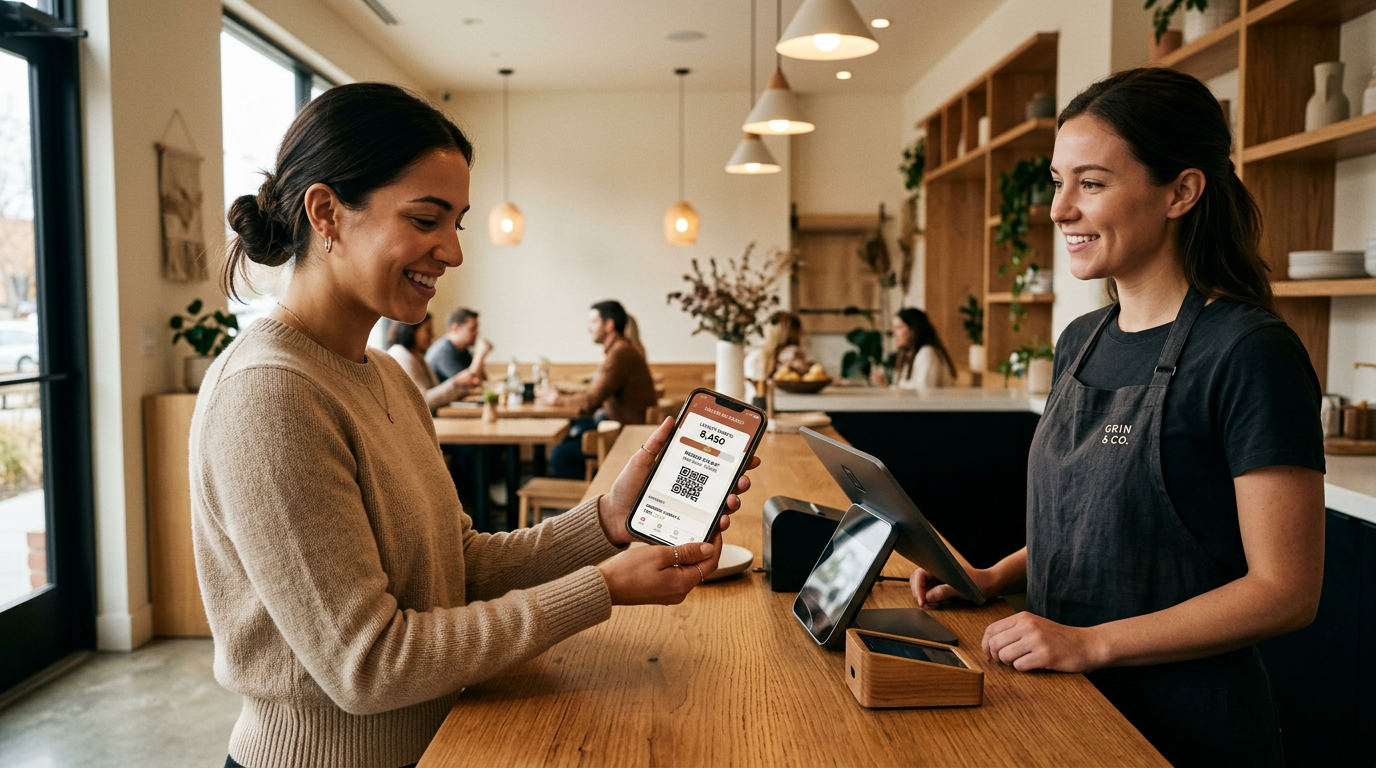
- Digital-first approach: Mobile apps eliminate plastic cards and forgotten wallets. Apps enable push notifications for personalized offers and make tracking progress effortless.
- Tiered structure: Silver, Gold, and Platinum levels create aspiration. Higher tiers offer progressively valuable rewards, encouraging customers to concentrate their dining spend at your restaurant rather than competitors.
- Points-based systems: Award points per dollar spent, then allow redemption for menu items, free meals, or exclusive experiences. The flexibility accommodates different customer preferences while maintaining simplicity.
Starbucks’ Rewards program demonstrates this principle brilliantly. Members receive personalized offers, early access to new products, and free refills—all while the company gathers data that drives further personalization. Even small restaurants can implement digital loyalty through platforms like Square Loyalty or Toast Rewards.
2. Personalized Experiences
Guests Crave Recognition. When a server remembers their name, their regular order, or their anniversary, that personal connection transforms a meal into a meaningful experience. Personalization demonstrates that you see them as individuals, not transaction volumes.
- Preference databases: Track dietary restrictions, favorite dishes, seating preferences, and special occasions in your CRM. Ensure this information transfers seamlessly between staff shifts.
- Allergen awareness: When guests communicate allergies or sensitivities, treating this information seriously builds profound trust. A manager should personally acknowledge severe allergies, and kitchen staff should follow strict protocols.
- Occasion recognition: Birthday and anniversary acknowledgments create emotional moments. A complimentary dessert with a handwritten card transforms an ordinary dinner into a celebration worth repeating.
- Consistent server assignments: When possible, welcome regulars with their preferred servers. This continuity deepens relationships and ensures personalized service.
The investment in personalization technology pays dividends through increased visit frequency and higher average tickets. Guests who feel known and valued become resistant to competitor attempts at winning their business.
3. Email Marketing
Email remains one of the most powerful tools in the restaurant marketer’s arsenal. Unlike social media algorithms that limit reach, email delivers your message directly to interested customers. The ROI statistics justify the effort: email marketing generates $42 for every $1 spent, a remarkable 42:1 return that outperforms virtually every other marketing channel.
- Segment your list: Group subscribers by visit frequency, cuisine preferences, dietary restrictions, and location. Segmentation enables targeted messaging that resonates.
- Personalize beyond first names: Reference past orders, suggest items based on preferences, and acknowledge milestones in your relationship.
- Balance promotional and value content: Mix special offers with recipes, chef spotlights, and behind-the-scenes content that deepens emotional connection.
- Optimize send times: Test different delivery times and days. Lunch restaurants may perform better Tuesday morning, while dinner destinations see higher engagement Thursday afternoon.
- Automate strategically: Set up welcome sequences for new subscribers, birthday campaigns, and re-engagement flows for lapsed customers.
Successful email programs treat subscribers as valued guests, not just marketing targets. Every communication should feel like a personal invitation from a friend who happens to work at your restaurant.
4. Social Media Engagement
Social platforms provide unprecedented opportunities to build community and respond directly to customers. However, the opportunity comes with obligation: modern guests expect responsive, authentic engagement. Ignoring comments or responding generically damages the relationship more than not being present at all.
- Respond to every comment: Positive reviews deserve thanks; negative reviews require acknowledgment and offline resolution. This public responsiveness demonstrates that you value feedback.
- Encourage user-generated content: Create Instagrammable moments through distinctive décor, creative plating, or photogenic signatures. Feature customer photos (with permission) to validate their experience.
- Show your personality: Behind-the-scenes content, staff spotlights, and day-in-the-life posts humanize your brand. Guests want to feel connected to the people who prepare their food.
- Run interactive content: Polls, Q&As, and caption contests generate engagement while providing insights into customer preferences.
The goal isn’t follower count—it’s creating a digital community where guests feel connected to your restaurant’s story. Engaged followers become regulars; regulars become advocates who share your content and recommend you to friends.
5. Consistent Quality
Loyalty cannot survive inconsistency. A single disappointing experience can undo months of relationship building. Guests return because they trust you to deliver a specific experience—and that trust requires unwavering consistency across every meal, every time.
- Recipe standardization: Every dish should taste identical regardless of who prepares it. Develop detailed recipes with precise measurements, cooking times, and plating specifications. AI Chef Pro (aichef.pro/en) helps restaurants maintain recipe consistency through intelligent systems that guide preparation and flag deviations.
- Comprehensive staff training: Front-of-house and back-of-house teams need thorough onboarding and ongoing development. Training should cover food safety, service standards, and the “why” behind procedures.
- Quality control checkpoints: Implement systems for checking food before it leaves the kitchen. A manager should verify presentation, temperature, and accuracy on complex orders.
- Supplier consistency: Source ingredients reliably. Switching suppliers to save costs often backfires when quality drops and regulars notice the difference.
Consistency builds the trust that enables loyalty. Guests should feel confident that their favorite dish will meet their expectations every single visit—that reliability forms the foundation of lasting relationships.
6. Surprise and Delight
Expected excellence earns routine visits; unexpected generosity creates memorable moments worth sharing. Strategic surprise-and-delight tactics transform satisfied customers into enthusiastic advocates who tell friends about their extraordinary experience.
- Random complimentary items: Occasionally sending a dessert or appetizer to a table (especially regulars) creates delight. The unpredictability enhances the impact—”You never know what惊喜 (surprise) might come.”
- Menu upgrades: Complimentary dish upgrades for loyal guests demonstrate appreciation without significant cost. A premium appetizer costs $5-8 wholesale but feels luxurious to the recipient.
- Handwritten notes: In an age of digital communication, handwritten acknowledgment carries remarkable weight. A simple “Thank you for being a loyal guest” on a receipt or card creates keepsakes.
- Exclusive previews: Inviting regulars to try new menu items before the general public makes them feel like insiders. This priority treatment rewards their loyalty and generates valuable feedback.
The key lies in authenticity. Guests recognize when surprises feel genuine versus manipulative. Plan surprise-and-delight moments carefully, ensuring they enhance rather than complicate the dining experience.
7. Community Building
Restaurants serve as community gathering spaces—and leveraging this role strengthens bonds beyond transactional relationships. Events and experiences transform your establishment from a place that serves food into a hub that serves community.
- Cooking classes: Host hands-on sessions where guests learn to prepare signature dishes. These experiences create deeper connections to your menu while generating revenue during off-peak hours.
- Wine and whiskey dinners: Educational pairings with industry experts attract foodies and enthusiasts willing to spend premium prices for curated experiences.
- Community events: Host charity fundraisers, local artist showcases, or neighborhood meetings. These activities position your restaurant as a community pillar, not just a business.
- Local sourcing stories: Highlight relationships with local farmers, artisan producers, and small-batch vendors. This transparency connects guests to your supply chain and values.
Community building requires ongoing commitment but generates extraordinary loyalty. Guests who feel connected to your restaurant’s role in the neighborhood resist switching to convenient alternatives.
8. Feedback Loops
Asking for feedback demonstrates that you value customer opinions—and acting on that feedback proves you listen. The key lies in creating systems that gather insights efficiently while showing guests their input shapes their experience.
- Post-visit surveys: Send brief digital surveys within hours of dining. Keep them short—five questions maximum—to maximize completion rates.
- Review monitoring: Track mentions across Google, Yelp, TripAdvisor, and social media. Respond professionally to all reviews, positive and negative.
- In-person check-ins: Train managers to visit tables periodically. Verbal feedback often reveals issues that written surveys miss.
- Act visibly on feedback: When guests see changes based on their suggestions, they understand their voice matters. Announce improvements through email or social media: “You asked, we listened—new menu items coming!”
- Close the loop: When customers report problems, follow up personally to ensure resolution. This attention transforms potential detractors into loyal advocates.
Feedback loops create continuous improvement cycles. Each piece of input helps refine the guest experience, while the act of asking strengthens the relationship.
9. Referral Programs
Word-of-mouth recommendations carry more credibility than any advertisement. Rather than leaving referral success to chance, formal programs incentivize satisfied customers to actively recruit friends.
- Double-sided rewards: Offer benefits to both referrer and referred. A “Bring a friend, you both get $10 off” promotion creates mutual incentive.
- Exclusive access: Offer referrers early access to events, new menu items, or special reservations. These exclusive rewards cost little but feel premium.
- Social sharing tools: Make it effortless to share referral links through text, email, and social media. The easier the process, the more referrals you’ll generate.
- Recognition programs: Acknowledge top referrers publicly (with permission). This social recognition motivates continued advocacy while inspiring others.
The best referral programs feel generous rather than transactional. When customers share your restaurant because they genuinely want friends to experience something wonderful, the referral carries authentic enthusiasm that no paid marketing can replicate.
10. Technology Integration
Modern retention requires modern tools. Technology enables personalization at scale, automates communication, and provides insights impossible to gather manually. The right systems transform guesswork into data-driven decisions.
- CRM systems: Centralize customer data across all touchpoints. Every interaction should inform your understanding of preferences and behavior.
- AI for personalization: Machine learning algorithms analyze ordering patterns to predict preferences and recommend items. AI Chef Pro offers advanced tools for maintaining recipe consistency while using data to optimize menu engineering for customer loyalty.
- Automated marketing: Set up triggered communications based on behavior—welcome emails for new subscribers, re-engagement campaigns for lapsed customers, birthday offers automatically deployed.
- POS integration: Connect your point-of-sale system with CRM and marketing platforms. This integration enables real
Customer Retention Strategies for Restaurants: How to Keep Guests Coming Back – Part 2
In the first part of this guide, we explored the fundamentals of customer retention and began examining proven strategies to build guest loyalty. Now, we’ll complete our exploration by diving into technology integration, essential KPIs for measuring success, and how AI is revolutionizing restaurant retention efforts.
Completing the Technology Integration Strategy
Modern restaurant technology extends far beyond point-of-sale systems. Building an integrated tech ecosystem allows you to create seamless guest experiences while collecting valuable data to inform your retention strategies.
Customer Relationship Management (CRM) Systems
A robust CRM system serves as the central hub for guest data. These platforms consolidate information from multiple touchpoints—online reservations, in-store purchases, delivery orders, and loyalty program interactions—creating comprehensive guest profiles.
Leading restaurant CRMs like Toast, TouchBistro, and Upserve enable you to track preferences, celebrate milestones (birthdays, anniversaries), and segment guests based on behavior patterns. A CRM allows your team to provide personalized service that makes guests feel genuinely valued, not just transacted with.
For example, when a regular guest arrives, your staff can immediately see their favorite table, usual order, and any special requests from previous visits. This level of personalization significantly impacts perceived service quality and encourages return visits.
Mobile Apps and Loyalty Integration
Dedicated restaurant mobile apps have become essential for multi-location establishments and quick-service restaurants. A well-designed app provides direct communication channels with guests, enabling push notifications for promotions, exclusive offers, and new menu announcements.
Mobile loyalty programs eliminate the friction of physical cards while offering flexibility in reward structures. Consider implementing tiered loyalty systems that unlock greater benefits as guests engage more frequently. The key is ensuring rewards feel attainable—research suggests customers need to see progress within their loyalty journey within 30 days to remain motivated.
Online Ordering and Delivery Platform Integration
With third-party delivery services commanding significant market share, integrating these platforms with your internal systems prevents disjointed guest experiences. When a guest orders through DoorDash, Uber Eats, or your own website, that data should flow into your CRM.
This integration enables you to send follow-up communications, offer direct-ordering incentives to encourage app usage, and track the full customer journey across channels. Many restaurants find that guests who order directly spend 15-25% more per order than those using third-party aggregators, making direct-order conversion a valuable retention target.
Consistency Is the #1 Retention Strategy
AI Chef Pro standardizes recipes and optimizes menus so every visit delivers the same exceptional experience. 55+ tools.
Measuring Retention: Key Performance Indicators
What gets measured gets managed. Understanding your retention metrics allows you to identify strengths, pinpoint weaknesses, and allocate resources effectively. Here are the essential KPIs every restaurant operator should track.
Customer Return Rate
The customer return rate measures the percentage of first-time guests who return within a specific period. Calculate this by dividing the number of returning customers by total first-time visitors during a given timeframe.
Industry benchmarks vary by restaurant type: quick-service establishments typically aim for 40-60% return rates, while casual dining targets 25-35%. If your numbers fall below benchmarks, investigate potential causes—food quality, service speed, ambiance issues, or competitive pressure.
Visit Frequency
Visit frequency tracks how often repeat customers dine with you. This metric helps segment your guest base into categories: occasional visitors (1-2 times monthly), regulars (3-4 times monthly), and super-regulars (weekly or more).
Understanding frequency patterns informs targeted promotions. Occasional visitors might respond to “come back sooner” incentives, while super-regulars could benefit from exclusive experiences that reinforce their loyalty status.
Customer Lifetime Value (CLV)
Customer Lifetime Value represents the total revenue a customer generates throughout their relationship with your restaurant. Calculate CLV by multiplying average transaction value, visit frequency, and customer lifespan.
A guest spending $35 per visit, dining 3 times monthly, over an average relationship of 3 years represents $3,780 in lifetime value. This perspective shifts retention investments from short-term costs to long-term investments, justifying expenditures on loyalty programs, personalized marketing, and exceptional service training.
Net Promoter Score (NPS)
NPS measures guest loyalty through a single question: “How likely are you to recommend us to a friend or colleague?” Guests respond on a 0-10 scale, categorizing as promoters (9-10), passives (7-8), or detractors (0-6).
Calculate your score by subtracting the percentage of detractors from promoters. Restaurant industry NPS averages range from 30-50 for healthy operations. Regularly tracking NPS allows you to measure the impact of operational changes and identify service issues before they damage retention.
Churn Rate
The churn rate indicates the percentage of previously loyal customers who stop visiting during a specific period. While often associated with subscription businesses, churn applies to restaurants when tracking former regulars who haven’t returned in 60-90 days.
High churn rates signal underlying problems requiring investigation. Perhaps new competitors opened nearby, service quality declined, or menu prices became misaligned with perceived value. Proactive churn analysis enables timely re-engagement efforts through personalized offers or satisfaction recovery campaigns.

AI-Powered Retention: The Future is Here
Artificial intelligence transforms restaurant retention strategies from reactive to predictive. Machine learning algorithms analyze vast data sets to identify patterns humans cannot detect, enabling hyper-personalized marketing and proactive retention interventions.
AI Chef Pro (aichef.pro/en) offers over 55 AI-powered tools specifically designed for foodservice professionals. These tools help restaurant owners and chefs leverage artificial intelligence for menu optimization, customer behavior analysis, and retention strategy development.
Key AI retention applications include:
- Predictive analytics: Identifying guests at risk of churning before they defect, allowing targeted win-back campaigns
- Personalized recommendations: Serving targeted offers based on individual preference patterns and purchase history
- Sentiment analysis: Monitoring online reviews and social media mentions to detect satisfaction trends in real-time
- Dynamic pricing: Optimizing offers based on demand patterns, time of week, and individual price sensitivity
- Automated communication: Scheduling personalized email and SMS campaigns at optimal times for engagement
AI Chef Pro’s suite of tools enables restaurants of all sizes to access enterprise-level retention capabilities without requiring data science expertise. The platform’s user-friendly interface allows operators to implement sophisticated strategies quickly, while the free tier (10 uses monthly) lets restaurants test capabilities before committing to paid plans.
Frequently Asked Questions About Restaurant Customer Retention
Turn First-Time Guests Into Regulars
Consistent quality + smart menu engineering = guests who keep coming back. AI Chef Pro makes it systematic.
How long does it take to see results from restaurant retention strategies?
Most restaurants see initial results within 30-60 days of implementing retention strategies, particularly with loyalty programs and targeted email campaigns. However, significant LTV improvements typically require 6-12 months of consistent effort. The key is maintaining consistent execution while tracking KPIs to measure progress.
What’s the most cost-effective retention strategy for small restaurants?
Email marketing remains highly cost-effective, with an average ROI of $36 for every $1 spent. Collect email addresses through receipts, reservations, and in-store sign-ups. Even small restaurants with lists of 500-1,000 active email subscribers can generate significant return through monthly newsletters and personalized offers.
How often should I contact guests through email or SMS?
Aim for 2-4 monthly communications via email and limit SMS to 1-2 monthly messages to avoid subscriber fatigue. Focus on sending valuable, personalized content rather than promotional-only messages. Segment your audience to ensure relevance—regulars don’t need the same offers as occasional visitors.
Should I focus more on new customer acquisition or existing guest retention?
While both are essential, research consistently shows that increasing customer retention by just 5% can increase profits by 25-95%. Existing guests already know your brand, require less marketing investment, and typically spend more than new customers. Balance your efforts, but prioritize retention for sustainable growth.
How do I recover a customer who had a bad experience?
Respond quickly to negative feedback, acknowledge the issue sincerely, and offer a tangible remedy. A personalized follow-up offer (complimentary appetizer, discount on next visit) demonstrates commitment to recovery. The goal is transforming detractors into promoters—research shows customers who have complaints resolved satisfactorily often become more loyal than those who never had issues.
What technology tools are essential for restaurant retention?
Essential tools include a POS system with CRM capabilities, email marketing platform, loyalty program solution, and online ordering integration. Advanced tools like AI Chef Pro provide predictive analytics and automation capabilities. Start with fundamentals—email capture and loyalty program—then expand based on your resources and growth stage.
Conclusion: Building a Sustainable Retention Framework
Customer retention in restaurants requires a strategic approach combining exceptional guest experiences, data-driven insights, and proactive engagement. The strategies outlined in this guide—personalized service, loyalty programs, technology integration, AI-powered analytics, and systematic measurement—work together to create sustainable competitive advantage.
Remember that retention success doesn’t happen overnight. Commit to consistent execution, regularly review your KPIs, and continuously optimize based on guest feedback and behavioral data. The restaurants that thrive long-term are those that treat every guest interaction as an opportunity to build lasting relationships.
Ready to elevate your restaurant’s retention strategy with artificial intelligence? AI Chef Pro offers 55+ tools designed specifically for foodservice professionals, from predictive analytics to personalized marketing automation. Start with the free plan—10 uses monthly—to discover how AI can transform your guest retention efforts.
Explore AI Chef Pro today and join forward-thinking restaurants leveraging technology to build loyal guest bases that drive sustainable growth.
Related Reading
- Restaurant Technology 2026: The Definitive Guide
- AI Menu Pricing Strategy: Data-Driven Restaurant Pricing
- Restaurant Profit Margins Explained
- Ghost Kitchen Guide 2026
- Best Restaurant Management Software 2026
- Restaurant Food Waste: 12 AI Strategies
- Restaurant Marketing Strategy 2026
- Restaurant SEO Complete Guide
Discover more from AI Chef Pro Blog
Subscribe to get the latest posts sent to your email.